-
Frozen Food's Middle Market Is an Underserved Credit Opportunity
Sep 30, 2026
Frozen food has moved from backup dinner option to everyday growth engine, reshaping how consumers shop and how manufacturers finance production. But behind the freezer aisle’s momentum is a middle-market financing challenge that secured lenders may be uniquely positioned to solve—if they understand the seasonal rhythms, inventory demands and receivables pressures driving the industry.
-
Factoring Finds Its Footing: Volume, Confidence and Working-Capital Demand Rise in H1 2026
Sep 30, 2026
SFNet’s Mid-Year Factoring Survey shows accelerating volume, expanding funds in use and remarkably stable credit performance as inflation, tariffs and higher financing costs reinforce factoring’s role in the working-capital market.
-
Q2 Rebound: ABL Activity Accelerates as Lenders See Stronger Demand
Sep 28, 2026
SFNet’s Q2 2026 Asset-Based Lending Survey shows a sharp rebound in new commitments, improving bank credit performance and renewed optimism about demand—even as inflation, higher rates and geopolitical uncertainty complicate the outlook.
-
 Interview with Betty Hernandez, Retiring President of SFNet
Sep 28, 2026
Betty Hernandez, executive vice president-chief credit officer of SLR Business Credit, reflects on her year as SFNet president, including new programs and events launched during her tenure and opportunities in the year ahead.
-
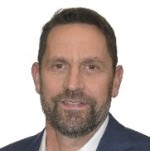 United Community Expands Asset-Based Lending Team with Industry Veteran Steve Janson
Sep 24, 2026
United Community has strengthened its Asset-Based Lending (ABL) team with the addition of Steve Janson as Senior ABL Business Development Officer. Janson brings more than 25 years of commercial finance and ABL experience, further enhancing United's ability to deliver flexible financing solutions to middle-market companies throughout the Southeast.
-
Higher Rates, Bigger Decisions. BMO’s Jon Biorkman on Middle Market Liquidity, Flexible Financing and Growth
Sep 22, 2026
Following the Federal Open Market Committee meeting held September 15-16, TSL Express sat down with Jon Biorkman, head, U.S. Specialty Finance, BMO Commercial Bank, to discuss the interest rate increase, how companies are managing liquidity, M&A growth and more.
-
 Why Liquidity Has Become a Competitive Advantage for Exporters
Sep 21, 2026
When it comes to international growth, many U.S. manufacturers encounter a familiar friction point. They’re thrilled to see healthy overseas demand for their goods. They’re ready to export more products, enter new markets, and increase sales. Yet they’re constrained by a common financial reality: obtaining adequate liquidity. One often overlooked option is government-backed export finance. Programs such as the U.S. Export-Import Bank's Working Capital Guarantee can help qualified exporters bridge liquidity gaps, support larger orders, and expand into international markets.
-
Gordon Brothers Welcomes Tron Allen as Senior Managing Director
Sep 18, 2026
Gordon Brothers, the global asset experts, has welcomed Tron Allen as senior managing director, further strengthening the firm's ability to deliver integrated solutions to private equity sponsors, banks and investment bankers across a broad range of industries.
-
Robert Biodrowski Named Head of Market Coverage for Wells Fargo Commercial Banking
Sep 16, 2026
John Manning, executive vice president and head of Commercial Banking Market Coverage, has announced his retirement after a career spanning more than 40 years in financial services, including more than 30 years with Wells Fargo and will retire at the end of the year. Chicago-based Rob Biodrowski will succeed Manning as head of Commercial Banking Market Coverage, starting in November.
-
Beyond the Basics: Expert Perspectives on Niche Industry Factoring & Lending
Sep 16, 2026
SFNet’s Beyond the Basics: Expert Perspectives on Niche Industry Factoring & Lending webinar this summer focused on some of the more specialized areas within factoring and asset-based lending — industries that can present tremendous opportunities, but also unique underwriting, operational, and legal challenges. Construction, staffing, PACA/PASA, healthcare receivables, oilfield services and SaaS were discussed.
-
Garrington Group of Companies Names Vince Mancuso Chief Executive Officer of Liquid Capital
Sep 14, 2026
Liquid Capital, a subsidiary of the Garrington Group of Companies, provides factoring and working capital solutions across the United States and Canada, today announced the appointment of Vince Mancuso, SFCP, CAEF, as Chief Executive Officer
-
 Borrowing Base Insights: What the Documents Say and What Actually Happens
Sep 14, 2026
In this edition of the Lender’s Edge, we discuss the modern Borrowing Base: what the documents say and what actually happens.
-
 NautaDutilh Reaffirms Commitment to US Clients With New York Leadership Transition
Sep 11, 2026
NautaDutilh reaffirms its long-standing commitment to clients in the United States with the appointment of Boudewijn Smit as managing partner of its New York office and lead Dutch Finance Transactions counsel in the US. Boudewijn succeeds Elizabeth van Schilfgaarde, who has led the New York office for many years and has played an important role in strengthening NautaDutilh's presence in the US market. Under her leadership, the firm further expanded its cross-border practice and deepened relationships with US clients, private equity sponsors, financial institutions and leading law firms.
-
 The Democratization of Debt Capital
Sep 10, 2026
Debt Capital Advisors are democratizing ABL like Amazon did to retail.
-
The $173 Billion Impact: How ABL and Factoring Help Power the U.S. Economy
Sep 8, 2026
SFNet’s 2026 Economic Impact Study finds asset-based lending and factoring increase U.S. GDP by 0.5% and support nearly 800,000 American jobs.
-
Mayer Brown Adds Structured Finance Partner Michelle Herman in New York
Sep 3, 2026
Mayer Brown announced today that structured finance lawyer Michelle Herman has joined the firm as a partner in New York in its Global Trade Finance practice. Michelle joins from Jones Day and brings extensive experience advising borrowers and lenders on domestic and cross-border financing transactions across a broad range of asset classes, including trade receivables, commercial loans, installment sales contracts, auto and equipment loans and leases, trademarks, natural gas assets, and other structured finance products.
-
 Financing the Physical Backbone of Artificial Intelligence
Sep 2, 2026
As artificial intelligence reshapes business, the real financing story may be unfolding behind the scenes. This article looks
beyond AI software to the data centers, power systems, cooling equipment and GPUs driving unprecedented capital demand— and explains why that infrastructure boom is creating new opportunities for commercial finance professionals.
-
HyperAMS Rebrands as Hyper Group, Marking A New Chapter of Growth
Sep 1, 2026
HyperAMS, a full-service asset valuation, monetization, and advisory firm for 16 years, has rebranded as Hyper Group, unveiling a new name and logo that reflects its legacy and future direction. The rebrand comes as Hyper Group continues to broaden its service offerings to meet growing client demand. This includes the recent launch of its Diligence Services division, which encompasses field exams and other collateral-focused services, as well as the continued development of its capabilities selling operating businesses.
-
 The Lawyers Behind the Loans: A Guide to Careers in Secured Finance Law
Aug 31, 2026
For law students and summer associates interested in finance, secured transactions or commercial law, secured finance offers a practical, business-focused career path at the center of how companies obtain working capital.
For law students and summer associates interested in finance, secured transactions or commercial law, a career as a commercial finance attorney can offer a unique blend of legal analysis, business strategy and deal-making. One of the most specialized areas within commercial finance is representing lenders in asset-based lending (ABL) and factoring transactions
-
Loeb Term Solutions Secures $25 Million Line of Credit from Pinnacle Financial Partners to Expand Equipment Financing for Clients
Aug 26, 2026
Loeb Term Solutions, LLC today announced it has closed a $25 million senior secured revolving line of credit (the "Facility") with Pinnacle Financial Partners subsidiary, Pinnacle Bank (d/b/a Synovus Bank). The Facility expands Loeb's capacity to fund equipment term loans for manufacturers and businesses that do not meet traditional bank credit standards. Loeb specializes in covenant-free lending primarily based on the value of a client's machinery and equipment, not just the client's credit.