

- U.S. Bank Expands Nationwide Middle Market Banking Team to Accelerate Growth
- Building on a Strong Foundation: Incoming SFNet President Stewart Hayes’ Vision
- SFNet Deal Activity Highlights – Q3 2026
- Veteran Chicago Asset-Based Lending Executive Joe Fobbe Launches Maple Bay Business Capital
- How a $1.4 Million Refinancing Helped a Manufacturer Uncover Hidden Borrowing Capacity
Building on a Strong Foundation: Incoming SFNet President Stewart Hayes’ Vision
November 11, 2026
By Eileen Wubbe

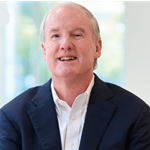
Stewart Hayes, Managing Director/Senior Vice President, Wells Fargo Lender Finance, and Incoming SFNet President, shares his career history and extensive contributions to SFNet as well as his top priorities and industry challenges and opportunities.
Can you provide our readers with your career background?
After graduating from Texas Tech University, I joined the credit training program at InterFirst Bank. After completing the bank’s credit training program, the company’s asset-based lending leaders, Stephen Fisher and Jim Casper, persuaded me to join the bank’s ABL division. The ABL business was not the “glamourous” spot in banking at the time, and while I did not realize it then, I started on a path to a wonderful 40+-year career in the industry. I have had the opportunity to serve in multiple roles, including field examination, portfolio management, underwriting, new business, and various leadership roles. In 2000, I was fortunate to have the opportunity to join industry icon Andrea Petro as one of the original team members of the newly created Wells Fargo Lender Finance business, where I still serve today. Unlike today’s market, back in 2000 banks were generally not lending to non-bank lenders and Wells Fargo was the first bank to establish a lending business solely focused on specialty commercial finance companies.
You’ve had a long and active record of SFNet involvement, including service on the Management Committee, Executive Committee, Board of Directors, as well as leadership roles such as Secured Foundation chair, Convention chair, 40 Under 40 Awards chair, and president of SFNet’s Dallas Chapter. What have you enjoyed most about these experiences?
I really enjoy the people. There are many talented, dedicated, and fun people at all levels within our industry and the SFNet staff. I have had the unique opportunity to work with many wonderful people and establish meaningful professional relationships as well as long-term personal friendships.
Serving in these roles has provided me with a variety of experiences, mostly positive and, at times, challenging. My SFNet involvement has provided me with key industry connections, many wonderful experiences, and favorable exposure for both me and my organization, which have all greatly enhanced my career and success.
What are some of the most memorable moments you have had through your involvement with SFNet?
There have been many memorable moments, but two special highlights stand out for me. First, I was elected to the SFNet Hall of Fame in 2022. This is a unique and exclusive honor that is voted upon by the leaders of the industry. The fact that the industry leaders bestowed this honor on me was incredibly touching and humbling. Second, I had the privilege (and pressure) of serving as Convention chair for the 2017 SFNet Annual Convention in Chicago. Through the efforts of many, we had the best-attended and most profitable conference the SFNet has had since that time. We are, of course, back in Chicago for this year’s conference. Chicago is a great city and always a great location for the conference, so I expect this year’s event will again be highly successful.
What does the role of SFNet president mean to you professionally and personally?
I attended my first Annual Convention in 1985 and could not have imagined ever serving as president of this prestigious organization. For me, this represents both a special honor and a tremendous accomplishment. I have always strived to do my best to fulfill the opportunities provided to me within SFNet. Hard work and dedication are always appreciated and can sometimes take you to unexpected places.
What are your top priorities as SFNet president?
We have a tradition that each SFNet president determines a word or phrase for their respective term. Mine is simple: Transition. The SFNet has been fortunate to have Rich Gumbrecht as the CEO for the last 10 years, but Rich has announced his intent to retire in late 2027. We have initiated a process to identify the next leader to serve as our CEO. Finding the right person and ensuring a smooth transition is the top priority. I should emphasize that Rich remains fully engaged and that he is personally committed to providing a smooth transition and leaving SFNet in a good place.
We are proactively broadening our reach to include previously untapped allies in our ecosystem and explore ways that we work together to better serve our members. Additionally, we need to continue to fulfil the evolving priorities of our members and find ways to add even more value to our members. We need to grow and strengthen our chapters, as they are the SFNet’s “boots on the ground,’’ where much of the industry networking occurs. So, there is a lot to focus on.
How do you hope to build on the initiatives of past SFNet presidents?
I am following Betty Hernandez, and before her, Rob Meyers and Barry Bobrow. All three were very influential and dedicated leaders of SFNet. These are very large shoes to fill. I aim to continue their efforts and do all that I can to support the SFNet and our member firms.
What do you see as the biggest opportunities and challenges facing SFNet right now?
The challenges are:
Industry consolidation: The current trend we are seeing is that consolidation among our member firms is rivaling the number of new entrants.
Event metrics: SFNet’s costs for hotels, food, and travel continue to rise quickly, whereas members are understandably managing costs carefully.
SFNet CEO transition: As discussed above, it is essential that we find the right successor for Rich.
But the challenges are also our opportunities. We have the opportunity to continue to meaningfully serve our members and expand the value that SFNet provides. We have the opportunity to find new names and new paths to broaden our membership. Finally, our leadership transition provides the opportunity for new perspectives and stakeholder relationships that we may not have today.
What do you believe are the biggest business challenges facing the secured finance industry?
The secured finance industry is doing quite well and has historically succeeded in all market conditions. That said, we face multiple challenges. In no particular order:
Transaction costs are materially higher, and even more so for bankruptcy and workout situations.
Technology is rapidly evolving, and we need to stay nimble in this regard.
Succession planning and talent bench depth (one example – the pool of people with true workout experience is thin).
Other forms of lending continue to compete in this space.
It is incumbent on SFNet to help equip and assist our members in navigating these challenges.
How can SFNet better support emerging leaders and succession planning across the industry?
Emerging leaders are THE FUTURE of our industry. I believe we have done many things right in recent years to support this group. SFNet’s 40 Under 40 Awards were established in 2016 to annually recognize 40 up-and-coming contributors and leaders. That program has been highly successful, and multiple honorees have subsequently navigated to key SFNet board and leadership positions (including Rob Meyers and Jennifer Palmer serving as presidents). SFNet's Emerging Leader Summit was started several years ago, and this annual event expands and improves each iteration. SFNet’s Mentoring Program pairs rising secured finance talent with seasoned industry leaders for a high-impact mentoring experience. And this fall, the new Reverse Mentoring Program was launched, which flips the traditional model by pairing early-career professionals as mentors with senior executives, giving senior leaders direct insight into emerging trends, technology, and evolving workplace perspectives. And SFNet continues to expand our educational offerings, including multiple online options at no charge. We need to continue to expand and improve upon these development efforts.
When you aren’t busy at Wells Fargo or volunteering with SFNet, what can you be found doing?
First and foremost, family time, including spending as much time with my four young grandchildren as possible and traveling with my wife when we can. Church activities are also important to me, and I particularly enjoy teaching in our ESL program (English as a second language). Time on a golf course is always a welcome treat.
To read this article as it is published in The Secured Lender, please click here.
About the Author




© 2026 Secured Finance Network

