
TSL Express Daily News
The Secured Lender
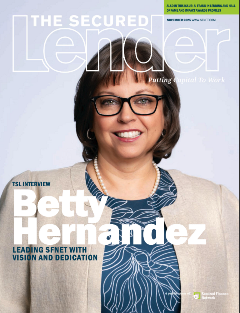
SFNet's The 81st Annual Convention Issue
Intro content. Orci varius natoque penatibus et magnis dis parturient montes, nascetur ridiculus mus. Curabitur iaculis sapien sagittis, accumsan magna ut, blandit massa. Quisque vehicula leo lorem, a tincidunt eros tempor nec. In quis lacus vitae risus egestas tincidunt. Phasellus nulla risus, sodales in purus non, euismod ultricies elit. Vestibulum mattis dolor non sem euismod interdum.
-
Top 5 Apps for Organizing
Mar 7, 2019If you’re like most of us, we try to stay organized in business and life, but it gets increasingly complicated…
-
The Importance of Stretching
Mar 7, 2019Every personal trainer and athletic coach I have ever worked with has stressed the importance of stretching. When working out…
-
SFNet's 40 Under 40 Award Winners Panel Recap
Mar 6, 2019Moderator: Samantha Alexander, regional underwriting manager, Wells Fargo Capital Finance’s Corporate Asset Based Lending group and 2016 CFA 40 Under…
-
SFNet's Inaugural YoPro Leadership Summit
Mar 6, 2019The Secured Finance Network brought together the next generation of commercial finance leaders for a full day of learning and…
-
It’s a Marathon, Not a Sprint
Aug 22, 2018I was recently invited to participate in an executive panel to answer questions from a credit training class comprised of...
-
It’s Not Too Late – Five Member Benefits to Cash In On Now
Aug 1, 2018As we hit the half way mark on calendar year 2018, it is a good time to take stock and…
-
It’s Time To Break Up With Your Phone
Jul 18, 2018Do I have your attention? Let’s be honest here: do you have the attention span to read this article? Compared…
-
Lien Management – What You Need to Know
Jun 6, 2018UCC filing is the cornerstone of all loans and every lien portfolio...
-
Potential Impacts of Blockchain on Commercial Lending
Jan 15, 2018By Raja Sengupta, Executive Vice President and General Manager, Wolters Kluwer’s Lien Solutions When it comes to the rising importance…
-
How to be a Good Leader
Dec 5, 2017I know what you’re thinking…another article about how to be a good leader? The short answer is yes…but this time,…
-
Fintech and Due Diligence – Disruptors and Established Firms Evolve
Oct 30, 2017The fintech sector has gone through a number of manifestations in the past two decades.
-
A Commercial Banker’s Tickler Transition Plan
Oct 18, 2017Just do a keyword search for “bank tickler,” and you’ll quickly realize that banks are still heavily reliant on manual…
-
Understanding and Developing Your Personal Brand: Four Steps to a More Intentional Career Progression
Sep 5, 2017It is imperative for individuals to have a general idea about their future career aspirations, just as companies should have clearly defined strategies.
-
Selecting a Technology Vendor: 3 Questions to Ask
Jul 5, 2017As with anything else at your bank, selecting a technology vendor can be a challenging decision. Users from across different…
-
Why Back-Office Lending Automation Enhances Customer Satisfaction
Apr 25, 2017Every bank strives to keep its customers happy. Of course, some institutions are better at achieving this goal than…
-
The Lost Art of the Loan Purchase
Mar 2, 2017Purchasing a loan directly from a bank whether at par or discount is a not-often-used technique that is easily…
-
Audit Prep: Why a Paperless Approach Makes Sense
Feb 15, 2017How much time does your financial institution spend preparing for audits? We recently surveyed 187 community banks, and the results…
-
Back Office Support Services: Helping you approve more clients
Feb 7, 2017How many times have you come across a potential client who’s financials are either not up to date, not accurate,…
-
“All Assets” is the Key When Drafting UCC-1 Financing Statement Collateral Descriptions
Jan 30, 2017Even when prepared by outside or in-house counsel, many lenders pay close attention to draft UCC financing statements before they…
-
Paper Loan Files: Does Your Bank Know the True Cost?
Jan 12, 2017Sure, there’s a tangible cost associated with deploying an electronic loan imaging system. Software, support, and scanning hardware are just…
.jpg?sfvrsn=f1093d2a_0 "#3 -_ 1 (1)")
December 10, 2025
Source: Mitsubishi HC Capital America
From AI-driven innovation to flexible financing models and strategic bank partnerships, lenders are adapting to an evolving economic landscape marked by technology, regulation, and disciplined risk management.
CHICAGO, December 10, 2025 — With the start of a year that is expected to bring easing inflation, nominal interest rate cuts, and renewed investment activity,Mitsubishi HC Capital America has identified four key trends that are expected to shape the equipment finance and private credit markets in 2026.
“While some market trends have raised concerns, the focus remains on the fundamentals: strong collateral, disciplined underwriting, and transparent partnerships,” said Brian Rosa, President of Commercial Finance for Mitsubishi HC Capital America. “We continue to take a long-term, measured approach to growth. This stance reflects the realities of an evolving economy where market forces and macroeconomic factors are shaping lending strategies.”
Against this backdrop, several themes are emerging that will define the equipment market in 2026, from technology-driven innovation to evolving risk strategies.
Technology, AI, and the Next Phase of Equipment Finance
Next year, it is anticipated that lenders will further adopt a more disciplined and forward-looking strategy that includes emerging technologies such as AI and supercomputing.
As artificial intelligence and supercomputing accelerate at unprecedented speed and reshape industries from manufacturing to logistics, demand for massive investments in data centers, cloud infrastructure, and advanced computing equipment continues to surge. In just this year alone, global spending on AI-driven data centers reached $580 billion. These projects are capital-intensive and often span multiple years, requiring financing models that can flex with evolving technology and demand. At the same time, growing debate around an “AI bubble” has led lenders and investors to approach the sector with more selectivity and rigor.
“Large-scale computing projects are expanding rapidly, driven by hyperscalers and rising demand for data center capacity,” explained Rosa. “These projects require sophisticated, scalable financing solutions that must evolve alongside the technology itself, supporting project completion as needs and demand grow.”
Beyond AI, lenders must also advance their use of analytics and telematics to modernize equipment financing. “Advancements in technology are revolutionizing equipment financing through enhanced analytics and ‘as-a-service’ models,” Rosa explained. “The future lies in usage-based financing structures that reward efficiency and align with how businesses actually operate.”
Evolving from Lender to Solutions Provider
Financing is evolving beyond traditional lending as companies look for solutions that better align with their operational realities. Businesses are increasingly seeking flexible structures that support cash flow, reduce risk, and provide greater control over their assets.
Short-term leases and rentals are gaining momentum as companies prioritize flexibility. The equipment rental market is projected to grow nearly 6% in 2025, reaching $82.6 billion and surpassing 2024’s record of $78.2 billion. This growth is fueled by demand for cost-effective solutions and asset-light strategies, enabling businesses to reduce upfront costs and allocate capital more strategically.
Value-added services such as remarketing support, trade-in programs, and adaptable leasing options are becoming more common across the market. These offerings help companies preserve working capital and respond more quickly to changing needs.
Regulatory Changes and Strategic Bank Partnerships
As the regulatory landscape evolves, Rosa sees an emerging opportunity in bank partnerships. With traditional banks pulling back from small business lending, independent lenders are stepping in to close the gap.
“Banks are actively seeking partnerships with independent lenders to access markets they can’t reach directly,” said Rosa. “This shift plays to our strengths in creative structuring and relationship-driven financing.”
Deregulation is also reshaping the lending landscape, opening new pathways for banks to participate and find markets they previously couldn’t access. As a result, more banks are working with independent lenders to extend their reach and stay competitive in specialized sectors.
Market and Economic Outlook
Mitsubishi HC Capital America also addressed the broader economic backdrop, noting the impact of tariffs, political uncertainty, and interest rate movements on capital planning. Businesses are entering 2026 with cautious optimism as rate cuts appear likely, but uneven consumer trends and global trade pressures continue to create uncertainty. These dynamics are influencing how companies allocate capital, manage liquidity, and structure financing for growth.
Within this environment, private credit continues to expand as traditional banks retrench. The U.S. private credit market reached $3 trillion in early 2025 and is projected to hit $5 trillion by 2029, reflecting a shift toward alternative financing sources as businesses seek flexibility and speed. Rosa emphasizes that companies should maintain a balanced, sector-specific approach to mitigate risk while positioning for growth.
“Volatility is inevitable, but preparation is everything,” added Rosa. “We’re positioned to adapt quickly, whether that means adjusting our exposure, refining product structures, or expanding into new value-added services.”
About Mitsubishi HC Capital America
Mitsubishi HC Capital America, together with Mitsubishi HC Capital Canada, provides robust specialty financing solutions across North America. A member of a diverse family of financing companies serving North America, the company uses its strong backing and deep resources from its parent company in Japan to combine a consultative approach with customized financial solutions to more than 64,000 customers.
With $7 billion in assets, Mitsubishi HC Capital America partners with vendors, equipment manufacturers, dealers and distributors, end users and commercial finance clients. The company serves the following industries: Construction, Distribution, EV and charging infrastructure, Franchise, Healthcare, Industrial, Insurance, Manufacturing, Technology and Transportation.
Learn more at www.mhccna.com or follow us on LinkedIn.