
TSL Express Daily News
The Secured Lender
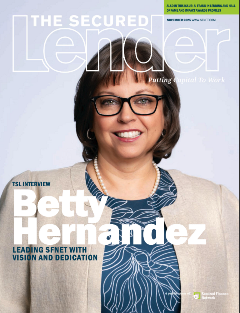
SFNet's The 81st Annual Convention Issue
Intro content. Orci varius natoque penatibus et magnis dis parturient montes, nascetur ridiculus mus. Curabitur iaculis sapien sagittis, accumsan magna ut, blandit massa. Quisque vehicula leo lorem, a tincidunt eros tempor nec. In quis lacus vitae risus egestas tincidunt. Phasellus nulla risus, sodales in purus non, euismod ultricies elit. Vestibulum mattis dolor non sem euismod interdum.
-
Top 5 Apps for Organizing
Mar 7, 2019If you’re like most of us, we try to stay organized in business and life, but it gets increasingly complicated…
-
The Importance of Stretching
Mar 7, 2019Every personal trainer and athletic coach I have ever worked with has stressed the importance of stretching. When working out…
-
SFNet's 40 Under 40 Award Winners Panel Recap
Mar 6, 2019Moderator: Samantha Alexander, regional underwriting manager, Wells Fargo Capital Finance’s Corporate Asset Based Lending group and 2016 CFA 40 Under…
-
SFNet's Inaugural YoPro Leadership Summit
Mar 6, 2019The Secured Finance Network brought together the next generation of commercial finance leaders for a full day of learning and…
-
It’s a Marathon, Not a Sprint
Aug 22, 2018I was recently invited to participate in an executive panel to answer questions from a credit training class comprised of...
-
It’s Not Too Late – Five Member Benefits to Cash In On Now
Aug 1, 2018As we hit the half way mark on calendar year 2018, it is a good time to take stock and…
-
It’s Time To Break Up With Your Phone
Jul 18, 2018Do I have your attention? Let’s be honest here: do you have the attention span to read this article? Compared…
-
Lien Management – What You Need to Know
Jun 6, 2018UCC filing is the cornerstone of all loans and every lien portfolio...
-
Potential Impacts of Blockchain on Commercial Lending
Jan 15, 2018By Raja Sengupta, Executive Vice President and General Manager, Wolters Kluwer’s Lien Solutions When it comes to the rising importance…
-
How to be a Good Leader
Dec 5, 2017I know what you’re thinking…another article about how to be a good leader? The short answer is yes…but this time,…
-
Fintech and Due Diligence – Disruptors and Established Firms Evolve
Oct 30, 2017The fintech sector has gone through a number of manifestations in the past two decades.
-
A Commercial Banker’s Tickler Transition Plan
Oct 18, 2017Just do a keyword search for “bank tickler,” and you’ll quickly realize that banks are still heavily reliant on manual…
-
Understanding and Developing Your Personal Brand: Four Steps to a More Intentional Career Progression
Sep 5, 2017It is imperative for individuals to have a general idea about their future career aspirations, just as companies should have clearly defined strategies.
-
Selecting a Technology Vendor: 3 Questions to Ask
Jul 5, 2017As with anything else at your bank, selecting a technology vendor can be a challenging decision. Users from across different…
-
Why Back-Office Lending Automation Enhances Customer Satisfaction
Apr 25, 2017Every bank strives to keep its customers happy. Of course, some institutions are better at achieving this goal than…
-
The Lost Art of the Loan Purchase
Mar 2, 2017Purchasing a loan directly from a bank whether at par or discount is a not-often-used technique that is easily…
-
Audit Prep: Why a Paperless Approach Makes Sense
Feb 15, 2017How much time does your financial institution spend preparing for audits? We recently surveyed 187 community banks, and the results…
-
Back Office Support Services: Helping you approve more clients
Feb 7, 2017How many times have you come across a potential client who’s financials are either not up to date, not accurate,…
-
“All Assets” is the Key When Drafting UCC-1 Financing Statement Collateral Descriptions
Jan 30, 2017Even when prepared by outside or in-house counsel, many lenders pay close attention to draft UCC financing statements before they…
-
Paper Loan Files: Does Your Bank Know the True Cost?
Jan 12, 2017Sure, there’s a tangible cost associated with deploying an electronic loan imaging system. Software, support, and scanning hardware are just…
.jpg?sfvrsn=f1093d2a_0 "#3 -_ 1 (1)")
December 1, 2025
Source: Yahoo Finance
NEW YORK, November 25, 2025--(BUSINESS WIRE)--KBRA releases its Q3 2025 Middle Market Borrower Surveillance Compendium, providing insights into credit quality across KBRA’s portfolio of rated direct lending transactions.
While credit quality remains predominantly stable, defaults across the landscape of middle market (MM) leveraged borrowers—whose loans sit inside rated transactions—are starting to rise as expected (see Private Credit: Q4 2024 Middle Market Borrower Surveillance Compendium—5% at Risk). Although the default rate among these borrowers currently remains low relative to the much higher rate observed in the broadly syndicated loan and corporate high-yield bond markets, we believe the gap will begin to close in 2026.
In this quarterly report, we provide data regarding the 2,287 unique global MM-sponsored borrowers assessed over the last 12 months (LTM) ended September 30, 2025. We examine key trends shaping credit quality by company size and sector, detail several undercurrents that warrant close observation, and provide new data on 484 surveillance assessments and 216 new assessments conducted in Q3 2025. Finally, we define new portfolio default monitor to reflect underlying credit conditions if not for the extraordinary level of sponsor and lender interventions or permissible concessions that have delayed some realized defaults. We believe this measure offers a more realistic view of credit conditions across the landscape of leveraged MM borrowers, especially as we expect to see pending maturities or liquidity gaps force a reckoning for some borrowers, or as sponsor patience wanes for others.
Key Takeaways
-
KBRA recorded only one payment default in the quarter, while bankruptcy filings and the broader direct lending default rate has contracted. However, we do not believe the low payment default rates reflect the true extent of stress among some MM borrowers. For example, downgrades have outpaced upgrades for seven consecutive quarters, resulting in a record count of obligors that KBRA assessed at ccc- in the LTM. To enhance transparency around stress levels within the private credit landscape, this quarterly issue introduces the KBRA Middle Market Default Monitor (KMDM), which consolidates borrowers identified as being in payment default or likely to be, absent ongoing interventions or concessions. The latter is composed of companies KBRA has assigned a ccc- assessment score. We believe this new consolidated monitor of defaults provides a more comprehensive view of stress among borrowers. In Q3 LTM, the KMDM by count was 3.5%, and 2.1% of the more than $1 trillion in assessed notional debt outstanding.
-
We expect the default monitor to rise modestly in 2026, reflecting a forward view of borrowers whose credit fundamentals are weakening. Indicators include a convergence of declining revenues, rising leverage, liquidity shortfalls, and upcoming maturities in certain MM segments. The gradual migration of Consumer Retail and health care roll-up borrowers into the ccc- category is particularly acute. Should macroeconomic conditions soften, or policy shifts further compress margin, these and other borrowers under stress are likely to face increased refinancing difficulties and elevated risk of default that we believe will force a reckoning for some.
-
In the broader portfolio, fundamental data remains robust at the median. During the LTM period, revenue and EBITDA compound annual growth rates (CAGR) moderated to 13% and 29%, respectively. Although growth has slowed relative to prior quarters, it remains broadly consistent across most sectors and company sizes. However, the share of companies reporting declining sales has continued to rise.
-
Margins expanded across all sectors due to continued cost-cutting, add-on activity, scaling operations, and the use of automation. Early adopters of process automation and artificial intelligence across various sectors are increasingly reporting tangible margin and sales uplift from implementing the technology, though long-term credit implications remain uncertain.
-
The median interest coverage ratio (ICR) increased for the first time in over a year, to 1.5x—a minor yet consequential indication of credit quality improvement for the median MM obligor. Concurrently, the share of obligors improving their ICR increased to nearly 60% (from 57% last quarter), highlighting the benefits of rate cuts and continued EBITDA growth.
-
Borrowers continue to proactively manage near-term maturities, reducing the proportion of notional debt maturing before year-end 2026 to 10%, down from 13% in Q2. However, nearly 30% of the companies with a maturity before year-end 2026 also had leverage above 10x or negative EBITDA and had received an assessment score of ccc+ or below—factors that will likely intensify refinancing risk, and lead to a potential source of defaults in the portfolio during 2026.
Click here to view the report.


