
TSL Express Daily News
The Secured Lender
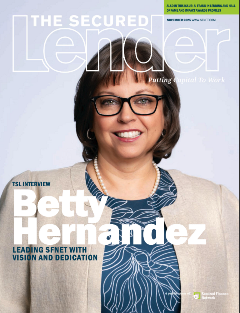
SFNet's The 81st Annual Convention Issue
Intro content. Orci varius natoque penatibus et magnis dis parturient montes, nascetur ridiculus mus. Curabitur iaculis sapien sagittis, accumsan magna ut, blandit massa. Quisque vehicula leo lorem, a tincidunt eros tempor nec. In quis lacus vitae risus egestas tincidunt. Phasellus nulla risus, sodales in purus non, euismod ultricies elit. Vestibulum mattis dolor non sem euismod interdum.
-
Top 5 Apps for Organizing
Mar 7, 2019If you’re like most of us, we try to stay organized in business and life, but it gets increasingly complicated…
-
The Importance of Stretching
Mar 7, 2019Every personal trainer and athletic coach I have ever worked with has stressed the importance of stretching. When working out…
-
SFNet's 40 Under 40 Award Winners Panel Recap
Mar 6, 2019Moderator: Samantha Alexander, regional underwriting manager, Wells Fargo Capital Finance’s Corporate Asset Based Lending group and 2016 CFA 40 Under…
-
SFNet's Inaugural YoPro Leadership Summit
Mar 6, 2019The Secured Finance Network brought together the next generation of commercial finance leaders for a full day of learning and…
-
It’s a Marathon, Not a Sprint
Aug 22, 2018I was recently invited to participate in an executive panel to answer questions from a credit training class comprised of...
-
It’s Not Too Late – Five Member Benefits to Cash In On Now
Aug 1, 2018As we hit the half way mark on calendar year 2018, it is a good time to take stock and…
-
It’s Time To Break Up With Your Phone
Jul 18, 2018Do I have your attention? Let’s be honest here: do you have the attention span to read this article? Compared…
-
Lien Management – What You Need to Know
Jun 6, 2018UCC filing is the cornerstone of all loans and every lien portfolio...
-
Potential Impacts of Blockchain on Commercial Lending
Jan 15, 2018By Raja Sengupta, Executive Vice President and General Manager, Wolters Kluwer’s Lien Solutions When it comes to the rising importance…
-
How to be a Good Leader
Dec 5, 2017I know what you’re thinking…another article about how to be a good leader? The short answer is yes…but this time,…
-
Fintech and Due Diligence – Disruptors and Established Firms Evolve
Oct 30, 2017The fintech sector has gone through a number of manifestations in the past two decades.
-
A Commercial Banker’s Tickler Transition Plan
Oct 18, 2017Just do a keyword search for “bank tickler,” and you’ll quickly realize that banks are still heavily reliant on manual…
-
Understanding and Developing Your Personal Brand: Four Steps to a More Intentional Career Progression
Sep 5, 2017It is imperative for individuals to have a general idea about their future career aspirations, just as companies should have clearly defined strategies.
-
Selecting a Technology Vendor: 3 Questions to Ask
Jul 5, 2017As with anything else at your bank, selecting a technology vendor can be a challenging decision. Users from across different…
-
Why Back-Office Lending Automation Enhances Customer Satisfaction
Apr 25, 2017Every bank strives to keep its customers happy. Of course, some institutions are better at achieving this goal than…
-
The Lost Art of the Loan Purchase
Mar 2, 2017Purchasing a loan directly from a bank whether at par or discount is a not-often-used technique that is easily…
-
Audit Prep: Why a Paperless Approach Makes Sense
Feb 15, 2017How much time does your financial institution spend preparing for audits? We recently surveyed 187 community banks, and the results…
-
Back Office Support Services: Helping you approve more clients
Feb 7, 2017How many times have you come across a potential client who’s financials are either not up to date, not accurate,…
-
“All Assets” is the Key When Drafting UCC-1 Financing Statement Collateral Descriptions
Jan 30, 2017Even when prepared by outside or in-house counsel, many lenders pay close attention to draft UCC financing statements before they…
-
Paper Loan Files: Does Your Bank Know the True Cost?
Jan 12, 2017Sure, there’s a tangible cost associated with deploying an electronic loan imaging system. Software, support, and scanning hardware are just…
.jpg?sfvrsn=f1093d2a_0 "#3 -_ 1 (1)")
April 16, 2025
Source: The SFNet Data Committee
In 2024, asset-based lending (ABL) remained stable. The market moved away from the disruptions caused by the pandemic and returned to a more typical, fundamentals-driven environment. However, with persistent inflation, uncertain monetary policy, and new tariffs, lenders are now preparing for increased volatility.
Drawing from SFNet’s 2024 Annual ABL Survey, syndicated market data from LSEG LPC, and new macroeconomic insights from KeyBridge Research, we’ll examine where ABL stands—and where it’s heading—as the lending landscape adapts to a higher-stakes economy.
Macro Backdrop: A Market on Shifting Ground
The U.S. economy entered 2025 with mixed signals. The labor market remained healthy through Q1, averaging +152,000 new jobs per month, and real disposable income grew in both January and February. But below the surface, consumer fatigue is setting in. Retail sales fell sharply in January—the worst month in over three years—and barely rebounded in February. Consumer confidence dropped for the fourth consecutive month in March, with expectations for future conditions at their lowest level in over a decade.
Then came tariffs.
The impact of the escalating tariffs on China and many other countries is already sending ripples through the economy: import prices are soaring, U.S. businesses are scrambling to shift supply chains, and inflationary pressures are reemerging. Production cuts are being reported in sectors reliant on low-cost Chinese goods, and credit quality risks are intensifying. “Credit quality will decline,” economist John Silvia, founder of Dynamic Economic Strategy, had warned. “Slower growth and higher input prices will reduce the cash flow for companies… and lead to poorer business credit quality.”
Now, economists are issuing even starker warnings. “Tariffs of this magnitude effectively function as a tax on American consumers and businesses,” said Mark Zandi, Chief Economist at Moody’s Analytics. “They will raise prices, slow growth, and introduce new financial stress on firms already dealing with tight credit conditions.” Small businesses are already reporting layoffs, frozen inventory, and halted production plans. The broader concern, Zandi adds, is that “these tariffs could tip the economy closer to recession if retaliatory actions escalate and investor confidence erodes.”
Markets have taken note: Treasury yields initially went down and at this writing are up significantly, corporate credit spreads are up, bond markets have largely shuttered for highly leveraged credits and global responses—from China to the Americas to the EU—are just beginning. For asset-based lenders, this landscape is both a challenge and an opportunity. It is a challenge to assess credit risks given uncertainty over tariff impact and the overall direction of the economy. The opportunity lies in the ability of the asset-based market to provide a steady source of liquidity in times of uncertainty.
Lender Sentiment: Confidence with Caution
Despite macro headwinds, the Lender Confidence Index compiled by SFNet and KeyBridge ticked up in Q4 to its highest level in three years. Banks rose +7.1 points to 63.2; non-banks climbed +8.7 to 65.8. Lenders expressed especially strong optimism for new business demand and staffing growth, though banks remained more cautious on portfolio utilization and economic outlooks.
Notably, this survey was conducted in February 2025 before the tariff announcements. Future readings may be more guarded.
2024 In Review: Syndicated vs. Full-Market Activity
Let’s not forget the fundamentals. LSEG LPC reports $105B in syndicated ABL volume in 2024, down 29% YoY, but still the fourth-highest year on record. However, when we zoom out using SFNet’s full-lens view—including both syndicated and non-syndicated deals—the story balances out:
- Total new commitments in 2024 exceeded $22B across all lenders
- Non-bank lenders posted a +9% YoY gain in new commitments, while banks declined -18.8%
- New outstandings surged for non-banks (+25.7%), but fell for banks (-17.8%)
- Utilization rates remained below historical norms: 35.7% for banks, 48.0% for non-banks
This dynamic reflects a market in transition. Banks are tightening risk, while non-banks are capturing lower middle-market demand with faster execution and flexibility.
Q4 Momentum: A Tale of Two Lenders
Fourth quarter activity paints a picture of divergence:
- Banks experienced muted deal flow. Commitment runoff jumped +88%, exceeding new commitments and driving down net balances.
- Non-banks, by contrast, saw an 11.9% increase in total commitments and a 168% jump in new outstandings, driven by faster underwriting cycles and sustained portfolio performance.
Still, credit quality remained mostly stable. Non-accruals and write-offs stayed well below historical norms, and even with a slight uptick in criticized loans, the industry isn’t flashing warning signs—yet.
Key Trends to Watch in 2025
1. Tariff Uncertainty and Stagflation Risk
With core PCE inflation at 2.8% and tariffs likely to push prices higher, the Fed faces a balancing act. Markets are pricing in four rate cuts by year-end; the Fed projects just two. Stagflation—the toxic mix of high prices and low growth—is now part of the economic conversation.
2. Refinancing Surge Incoming
ABL commitments totaling $347B are set to mature over the next 24 months (LSEG). With traditional credit markets still unstable, refinancing volumes may rise significantly.
3. Non-Bank Expansion Continues
Non-banks increased their share of new commitments and outstandings in 2024, a trend expected to accelerate. Purchased participations by non-banks grew to 5.9% of outstandings—up 223 bps from 2022.
4. Sector Rotation: From Retail to Industrial
Retail’s share of outstandings fell 200 bps YoY, while wholesale and manufacturing continued to dominate. ABL is well-positioned to support companies navigating reshoring, supply chain complexity, and energy transition challenges.
5. Operational Efficiency Through Tech
Underwriting headcounts are growing, but portfolio management and field exams are shrinking. Digital adoption is underway, and lenders investing in automation will see faster closings and improved risk tracking.
Final Word: Resilience With Eyes Wide Open
The story of 2024 wasn’t one of decline—it was one of repositioning. ABL proved once again that it’s not just a product for downturns but a strategic, scalable financing solution in uncertain times.
Looking ahead, lenders should brace for macro-induced volatility, but remain confident in the structural strength of the market. As SFNet’s CEO, Rich Gumbrecht, put it: “ABL has long been seen as an ‘all-weather’ industry—and it’s well-positioned to provide borrowers the capital they need to navigate uncertainty.”.
As tariff effects take hold and inflation dynamics evolve, expect a more discerning lending environment, more competitive deal structures, and increased differentiation between bank and non-bank strategies. If history is any guide, ABL lenders will adapt, and pick up the pieces left behind by aggressive leverage.


