
TSL Express Daily News
The Secured Lender
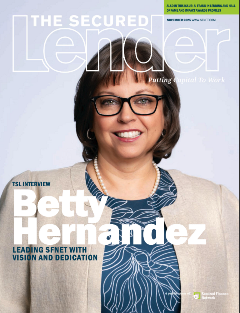
SFNet's The 81st Annual Convention Issue
Intro content. Orci varius natoque penatibus et magnis dis parturient montes, nascetur ridiculus mus. Curabitur iaculis sapien sagittis, accumsan magna ut, blandit massa. Quisque vehicula leo lorem, a tincidunt eros tempor nec. In quis lacus vitae risus egestas tincidunt. Phasellus nulla risus, sodales in purus non, euismod ultricies elit. Vestibulum mattis dolor non sem euismod interdum.
-
Top 5 Apps for Organizing
Mar 7, 2019If you’re like most of us, we try to stay organized in business and life, but it gets increasingly complicated…
-
The Importance of Stretching
Mar 7, 2019Every personal trainer and athletic coach I have ever worked with has stressed the importance of stretching. When working out…
-
SFNet's 40 Under 40 Award Winners Panel Recap
Mar 6, 2019Moderator: Samantha Alexander, regional underwriting manager, Wells Fargo Capital Finance’s Corporate Asset Based Lending group and 2016 CFA 40 Under…
-
SFNet's Inaugural YoPro Leadership Summit
Mar 6, 2019The Secured Finance Network brought together the next generation of commercial finance leaders for a full day of learning and…
-
It’s a Marathon, Not a Sprint
Aug 22, 2018I was recently invited to participate in an executive panel to answer questions from a credit training class comprised of...
-
It’s Not Too Late – Five Member Benefits to Cash In On Now
Aug 1, 2018As we hit the half way mark on calendar year 2018, it is a good time to take stock and…
-
It’s Time To Break Up With Your Phone
Jul 18, 2018Do I have your attention? Let’s be honest here: do you have the attention span to read this article? Compared…
-
Lien Management – What You Need to Know
Jun 6, 2018UCC filing is the cornerstone of all loans and every lien portfolio...
-
Potential Impacts of Blockchain on Commercial Lending
Jan 15, 2018By Raja Sengupta, Executive Vice President and General Manager, Wolters Kluwer’s Lien Solutions When it comes to the rising importance…
-
How to be a Good Leader
Dec 5, 2017I know what you’re thinking…another article about how to be a good leader? The short answer is yes…but this time,…
-
Fintech and Due Diligence – Disruptors and Established Firms Evolve
Oct 30, 2017The fintech sector has gone through a number of manifestations in the past two decades.
-
A Commercial Banker’s Tickler Transition Plan
Oct 18, 2017Just do a keyword search for “bank tickler,” and you’ll quickly realize that banks are still heavily reliant on manual…
-
Understanding and Developing Your Personal Brand: Four Steps to a More Intentional Career Progression
Sep 5, 2017It is imperative for individuals to have a general idea about their future career aspirations, just as companies should have clearly defined strategies.
-
Selecting a Technology Vendor: 3 Questions to Ask
Jul 5, 2017As with anything else at your bank, selecting a technology vendor can be a challenging decision. Users from across different…
-
Why Back-Office Lending Automation Enhances Customer Satisfaction
Apr 25, 2017Every bank strives to keep its customers happy. Of course, some institutions are better at achieving this goal than…
-
The Lost Art of the Loan Purchase
Mar 2, 2017Purchasing a loan directly from a bank whether at par or discount is a not-often-used technique that is easily…
-
Audit Prep: Why a Paperless Approach Makes Sense
Feb 15, 2017How much time does your financial institution spend preparing for audits? We recently surveyed 187 community banks, and the results…
-
Back Office Support Services: Helping you approve more clients
Feb 7, 2017How many times have you come across a potential client who’s financials are either not up to date, not accurate,…
-
“All Assets” is the Key When Drafting UCC-1 Financing Statement Collateral Descriptions
Jan 30, 2017Even when prepared by outside or in-house counsel, many lenders pay close attention to draft UCC financing statements before they…
-
Paper Loan Files: Does Your Bank Know the True Cost?
Jan 12, 2017Sure, there’s a tangible cost associated with deploying an electronic loan imaging system. Software, support, and scanning hardware are just…
.jpg?sfvrsn=f1093d2a_0 "#3 -_ 1 (1)")
October 26, 2023
Source: PR Newswire
- Business leaders are increasingly paying attention to the climate's impact on the operation of their companies
- A growing number of companies are turning to carbon offset markets to help mitigate climate change, but very few have a strategy in place
- Majority of business leaders want to hear more about financial options to improve climate resilience
TORONTO, Oct. 25, 2023 /PRNewswire/ - According to the second annual BMO Climate Institute Business Leaders Survey, the business impact of climate change is driving more business leaders to think about mitigation plans, especially in the United States. Based on a survey of 700 business leaders in the U.S. and Canada, the 2023 results reveal why companies are increasingly taking action, how they are thinking about climate risk, and the challenges and opportunities they face in their transition to net-zero.
"Inspired by our Purpose, to Boldly Grow the Good in business and life, BMO's Climate Ambition is to be our clients' lead partner in the transition to a net zero world," said Melissa Fifield, Head, BMO Climate Institute. "As we make progress toward this goal, the BMO Climate Institute Business Leaders Survey helps us understand how businesses view climate change. Nearly half are already experiencing an impact on their businesses and many more expect to feel the effects in under five years. Insights from this research help us advance the conversation around the challenges and opportunities of energy transition and respond to our clients' growing needs in this space."
Though other business priorities continue to take precedence, many surveyed are already feeling the effects of climate change and are thinking about actions they can take
Even though, as in 2022, concerns like inflation and interest rates (89 percent), labour shortages (76 per cent), and supply chain bottlenecks (75 per cent) continue to weigh heavily, business leaders are increasingly paying attention to climate change:
- Nearly half (48 per cent) of business leaders surveyed believe climate change is already affecting their businesses and even more (81 per cent) anticipate it will affect their businesses in the next 5 years.
- 32 per cent of businesses have a plan in place to address it – up 6 per cent from last year – and 35 per cent are in the process of developing one.
- U.S. business leaders (38 per cent) are more likely to be moving forward with plans (up 10 per cent), compared to Canada where only 27 per cent have a plan in place (up 3 per cent).
Though business leaders are slightly less confident in their ability to make a difference to greenhouse gas emissions, the survey identified actions believed to have the most impact:
- 76 per cent of Canadian and U.S. businesses chose the use of renewable, compostable and recyclable resources.
- 61 per cent chose tracking and managing supply chain emissions and cutting back on travel.
- Over half (53 per cent) chose the purchase of carbon credits, up 6 per cent from 2022, and an 8 per cent increase in Canada alone.
In addition to government and industry climate policies, business leaders are increasingly looking to financial institutions for solutions
Many business leaders think governments and industries could provide more realistic policies to help. Industry policies continue to be perceived as more lenient by all businesses, especially in Canada where only 44 per cent of businesses find them ambitious (10 per cent too ambitious, 34 per cent ambitious but achievable).
In the U.S.:
- 39 per cent believe the climate change policies set by government are too ambitious to be achieved (up 18 per cent from last year), 34 per cent believe they are ambitious but achievable and 24 per cent believe they are lenient.
- 25 per cent are more likely to say they are being strongly supported by the government to establish and pursue a plan in a way that allows them to make realistic climate goals, up 6 per cent from last year.
In Canada:
- 45 per cent are more likely to find government policies achievable – similar to last year's findings – and only 3 per cent of leaders thought their government's policies are just right.
- 10 percent said they feel strongly supported to establish and pursue a realistic climate plan.
The majority (68 per cent) of businesses leaders continue to believe that financial institutions could play a role in helping companies become more climate friendly. 22 per cent (28 per cent in the U.S. and 15 per cent in Canada) say they are already playing this role, with 46 per cent saying there is more they need to do. Among the products and services available from financial institutions:
- 77 per cent of leaders are interested in the ability to generate insights on how business can adapt and thrive in an evolving climate landscape.
- 77 per cent are interested in financial premiums for meeting climate-related targets, including discounted loans, and higher deposit rates.
- 76 per cent value more analysis on how climate change will affect their business.
- 75 per cent are interested in a tailored suite of green advisory, investment and lending products and services to support climate-related investments.
- 74 percent (78 per cent of Canadians and 70 per cent of Americans) are looking for an easier way to track greenhouse gas emissions.
- 67 per cent (70 per cent of Canadians and 65 per cent of Americans) are looking for help with carbon offsets and trading carbon credits globally.
"The results of the survey reveal that 61 per cent of leaders with a plan are doing it because they think it's good for their business, while those without a plan are looking for advice and support in mitigating the impacts of climate change on their businesses," said Michael Torrance, Chief Sustainability Officer, BMO. "Business leaders are telling us they value products, services and incentives that will help them reduce their footprint, as well as insights to help them adapt and thrive in the evolving landscape. As our clients' lead partner in the transition to a net-zero world, BMO can meet these needs, helping them to make progress by contributing to their understanding of climate risks, advising them on their climate plans, and discussing their financial options."
BMO offers a range of products and services to help business clients with the transition to net-zero, including:
- Climate Smart, a carbon accounting program that helps businesses measure and reduce their carbon footprint and cut operational costs
- Sustainable Finance expertise and solutions, including loans, deposits and bonds
- Carbon Credit development and trading advisory to help businesses meet sustainability goals
- A real estate retrofit program (Canada) to help real estate owners and operators improve the energy efficiency of their buildings
- Green Future Financing, an initiative that rewards environmentally responsible business practices with affordable loans
Established in 2021, The BMO Climate Institute is a centre of climate expertise, bridging science, policy, finance, and economics to help accelerate climate solutions. It supports clients by engaging with industry, the public sector, academia and investors, and serves as a resource on decarbonization, resilience, social impact, and biodiversity.
The second annual BMO Climate Institute Business Leaders survey was conducted by Pollara with more than 700 business leaders in the U.S. and Canada between August 3 and August 24, 2023. To view an in-depth report click here.
BMO Financial Group is the eighth largest bank in North America by assets, with total assets of $1.25 trillion as of July 31, 2023. Serving customers for 200 years and counting, BMO is a diverse team of highly engaged employees providing a broad range of personal and commercial banking, wealth management, global markets and investment banking products and services to over 13 million customers across Canada, the United States, and in select markets globally. Driven by a single purpose, to Boldly Grow the Good in business and life, BMO is committed to driving positive change in the world, and making progress for a thriving economy, sustainable future, and inclusive society.


