
TSL Express Daily News
The Secured Lender
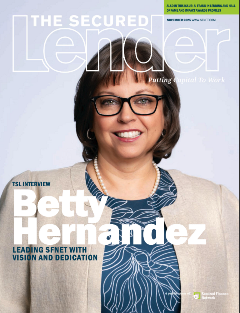
SFNet's The 81st Annual Convention Issue
Intro content. Orci varius natoque penatibus et magnis dis parturient montes, nascetur ridiculus mus. Curabitur iaculis sapien sagittis, accumsan magna ut, blandit massa. Quisque vehicula leo lorem, a tincidunt eros tempor nec. In quis lacus vitae risus egestas tincidunt. Phasellus nulla risus, sodales in purus non, euismod ultricies elit. Vestibulum mattis dolor non sem euismod interdum.
-
Top 5 Apps for Organizing
Mar 7, 2019If you’re like most of us, we try to stay organized in business and life, but it gets increasingly complicated…
-
The Importance of Stretching
Mar 7, 2019Every personal trainer and athletic coach I have ever worked with has stressed the importance of stretching. When working out…
-
SFNet's 40 Under 40 Award Winners Panel Recap
Mar 6, 2019Moderator: Samantha Alexander, regional underwriting manager, Wells Fargo Capital Finance’s Corporate Asset Based Lending group and 2016 CFA 40 Under…
-
SFNet's Inaugural YoPro Leadership Summit
Mar 6, 2019The Secured Finance Network brought together the next generation of commercial finance leaders for a full day of learning and…
-
It’s a Marathon, Not a Sprint
Aug 22, 2018I was recently invited to participate in an executive panel to answer questions from a credit training class comprised of...
-
It’s Not Too Late – Five Member Benefits to Cash In On Now
Aug 1, 2018As we hit the half way mark on calendar year 2018, it is a good time to take stock and…
-
It’s Time To Break Up With Your Phone
Jul 18, 2018Do I have your attention? Let’s be honest here: do you have the attention span to read this article? Compared…
-
Lien Management – What You Need to Know
Jun 6, 2018UCC filing is the cornerstone of all loans and every lien portfolio...
-
Potential Impacts of Blockchain on Commercial Lending
Jan 15, 2018By Raja Sengupta, Executive Vice President and General Manager, Wolters Kluwer’s Lien Solutions When it comes to the rising importance…
-
How to be a Good Leader
Dec 5, 2017I know what you’re thinking…another article about how to be a good leader? The short answer is yes…but this time,…
-
Fintech and Due Diligence – Disruptors and Established Firms Evolve
Oct 30, 2017The fintech sector has gone through a number of manifestations in the past two decades.
-
A Commercial Banker’s Tickler Transition Plan
Oct 18, 2017Just do a keyword search for “bank tickler,” and you’ll quickly realize that banks are still heavily reliant on manual…
-
Understanding and Developing Your Personal Brand: Four Steps to a More Intentional Career Progression
Sep 5, 2017It is imperative for individuals to have a general idea about their future career aspirations, just as companies should have clearly defined strategies.
-
Selecting a Technology Vendor: 3 Questions to Ask
Jul 5, 2017As with anything else at your bank, selecting a technology vendor can be a challenging decision. Users from across different…
-
Why Back-Office Lending Automation Enhances Customer Satisfaction
Apr 25, 2017Every bank strives to keep its customers happy. Of course, some institutions are better at achieving this goal than…
-
The Lost Art of the Loan Purchase
Mar 2, 2017Purchasing a loan directly from a bank whether at par or discount is a not-often-used technique that is easily…
-
Audit Prep: Why a Paperless Approach Makes Sense
Feb 15, 2017How much time does your financial institution spend preparing for audits? We recently surveyed 187 community banks, and the results…
-
Back Office Support Services: Helping you approve more clients
Feb 7, 2017How many times have you come across a potential client who’s financials are either not up to date, not accurate,…
-
“All Assets” is the Key When Drafting UCC-1 Financing Statement Collateral Descriptions
Jan 30, 2017Even when prepared by outside or in-house counsel, many lenders pay close attention to draft UCC financing statements before they…
-
Paper Loan Files: Does Your Bank Know the True Cost?
Jan 12, 2017Sure, there’s a tangible cost associated with deploying an electronic loan imaging system. Software, support, and scanning hardware are just…
.jpg?sfvrsn=f1093d2a_0 "#3 -_ 1 (1)")
August 31, 2023
Source: Bryan Cave Leighton Caver
On August 24, 2023, the Second Circuit prevented turmoil in the commercial lending market, ruling in Kirschner v. JP Morgan Chase Bank, N.A. (JPM), et al. that syndicated secured term loan notes were not securities for state-law purposes, applying the Supreme Court’s test in Reves v. Ernst & Young. Key factors included:
-
The loans were offered only to sophisticated institutional entities
-
Restrictions on assignment and certifications by lenders in loan documents
-
Expectations of parties in the commercial loan market
-
The secured nature of the loans and the existence of federal banking regulations
Although the status quo was preserved, the court’s reasoning points towards a few opportunities to mitigate risk further in commercial loan documentation, as discussed below.
The commercial lending market had anxiously awaited the Second Circuit’s decision, fearing the significant disruptions that would have resulted from an adverse ruling. The plaintiff may, of course, appeal the decision to the Supreme Court. However, given the current majority’s aversion to extending the “administrative state” beyond even historic practice, and the absence of a disagreement among circuits, the Court may not be interested in considering the issue.
DEEPER DIVE
Background
The case arose out a $1.775 billion term loan to Millennium Health LLC, Inc., a California-based urine drug testing company. The borrower intended to use the proceeds to repay amounts under an earlier credit agreement, distribute cash to shareholders, redeem outstanding warrants, debentures and stock options, and pay certain expenses. The borrower’s obligations under the credit agreement were secured by a perfected security interest in its tangible and intangible assets.
The lead banks prepared a confidential information memorandum (CIM) in order to syndicate term loans to other lenders, including both private and public-side investors, some of which were “parent lenders” that sub-allocated their allocations of term loans to investors in their respective funds.
The credit agreement facilitated the creation of a secondary market for the notes, subject to certain restrictions, including:
-
A prohibition on assignment to natural persons
-
The requirement that the borrower and JPM, as administrative agent, consent to assignments, subject to certain exceptions
-
The requirement that the amount assigned exceed $1 million, with certain exceptions
Several months after the April 2014 closing, a jury determined Millennium had violated federal anti-kickback statutes and awarded the plaintiff $2.8 million in compensatory damages and $12 million in punitive damages. The Eleventh Circuit later vacated the verdict.
Later that year, the DOJ notified Millennium that it would intervene in qui tam litigation involving its billing practices. In 2015, Millennium completed a global settlement with DOJ for $256 million. Shortly thereafter, it filed for Chapter 11 bankruptcy relief.
On August 1, 2017, the plaintiff – on behalf of lenders who purchased notes and have claims in bankruptcy – filed suit in New York state court for violations of state securities laws, negligent misrepresentation, breach of fiduciary duty, breach of contract, and breach of the implied contractual duty of good faith and fair dealing. Following removal to federal court, the district court granted defendants’ motion to dismiss in May 2020, concluding that plaintiff failed to plead facts plausibly suggesting that the notes are “securities” under the Supreme Court’s test in Reves v. Ernst & Young. Plaintiff appealed in October 2021.
In May 2023, the Second Circuit asked the SEC to provide its views. However, in July, the General Counsel declined, explaining that despite “its diligent efforts to respond to the Court’s order and provide the Commission’s views, the staff is unfortunately not in a position to file a brief on behalf of the Commission.”
The court’s ruling
As a threshold matter, the Second Circuit concluded the district court properly determined it had jurisdiction over the case pursuant to the 1919 Edge Act, which promotes the establishment of international banking and financial companies. Among other things, the court found that JPM itself engaged in the requisite international or foreign banking as part of the transaction, as it directly assigned interests in the term loan to foreign lenders as part of the syndication. The court deemed irrelevant that JPM did not itself solicit the foreign lenders.
Although the plaintiff brought claims under the securities laws of four states, the court and the parties agreed to apply the Supreme Court’s test in Reves. Under Reves, courts apply a “family resemblance” test to determine whether a “note” is a “security.” The test “begin[s] with a presumption that every note is a security.” It then directs courts to examine four factors, each of which bears on whether the note was issued in an investment context (and is thus a security) or in a consumer or commercial context (and is thus not a security).
The Second Circuit found that only the first of the four factors supported the plaintiff’s claims and that the notes “bear a strong resemblance” to those that are not securities, i.e., loans issued by banks for commercial purposes. The court addressed each factor separately:
-
Motivations of the parties. The first factor involves determining whether the motivations of the parties are investment (suggesting a security) or commercial or consumer (suggesting a non-security). On this factor, the court found they weigh in favor of concluding that the notes were securities because, although Millennium’s motivation appeared to be “commercial,” the lenders’ motivations were “investment” in that, like most all lenders, they expected to profit from their purchase of syndicated notes.
-
Plan of distribution. The second factor involves determining whether the notes were offered and sold to a broad segment of the public, such that there would be common trading for speculation or investment. The court noted that the notes were offered and allocated only to sophisticated institutional entities. In addition, it found that the terms of the notes and syndication contained restrictions on assignment, as discussed above, that made them unavailable to the general public. In this regard, they resembled the restrictions in the court’s prior decision in Banco Espanol de Credito v. Security Pacific National Bank, 973 F.2d 51 (2d Cir. 1992). According to the court, that the notes were distributed to more than 400 investors – not merely eleven as in Banco Espanol -- “did not render them available ‘to a broad segment of the public’” in the circumstances presented in this case.
-
The public’s reasonable expectations. The third factor involves examining the reasonable expectations of the investing public. In this case, the court found this factor does not indicate that the notes are securities because the lenders were sophisticated and experienced institutional entities with ample notice that the notes were loans and not investments in a business enterprise.
It noted that they certified that they had “independently and without reliance upon any Agent or any Lender, and based on such documents and information as [they] ha[ve] deemed appropriate, made [their] own appraisal of and investigation into the business, operations, property, financial and other condition and creditworthiness of [Millennium] and made [their] own decision to make [their] Loans hereunder.” It viewed this as “substantively identical” to the certifications made in Banco Espanol that were “central to our determination that the buyers there could not have reasonably perceived the loan participations as securities.” It dismissed “isolated references” to “investors” in the loan documents as insufficient to create a “reasonable” expectation that the notes were securities. The court cautioned that “[i]t is possible that a court faced with a different transaction could find that the reasonable investing public perceived an instrument labelled a ‘syndicated term loan’ to be a ‘security.’”
-
Other risk-reducing factors. The fourth factor involves considering whether another factor, such as the existence of another regulatory regime, significantly reduces the risk of the instrument so that Securities Act protection is unnecessary. The court concluded that such protection is not necessary because:
-
The notes were secured by a perfected first priority security interest in all of the borrower’s tangible and intangible assets.
-
Federal banking regulators had issued specific policy guidelines addressing syndicated term loans. The court acknowledged that the guidance is focused on minimizing risks to banks, but noted that it also aims to protect consumers.
-
TAKEAWAYS
The Second Circuit decision largely preserves the status quo, and avoided "devestating effects on the leveraged loan market". However, in light of the court’s reasoning, consideration should be given to:
-
Limiting the syndication of loans only to sophisticated institutional entities.
-
Reviewing restrictions on assignment (including borrower and administrative agent consent rights with respect thereto), and considering whether higher investment thresholds would be appropriate.
-
Reducing or eliminating references to “investors” in loan documents, instead, maintaining consistent references to buyers as “lenders” – subject to feedback from non-bank investors who may favor alternative labels, such as ”creditors.”
-
Avoiding references to “purchasing” notes in loan documents, instead making consistent references to the “making” or “funding” of loans.
-
Maintaining Banco Espanol-like certifications to disclaim reliance on the banks and make independent credit analyses; conforming language throughout the documentation, including the CIM and ancillary agreements.
-
Revising any “private placement” representations or other provisions to conform to the characterization of the transaction as commercial in nature, not as investment.


