
TSL Express Daily News
The Secured Lender
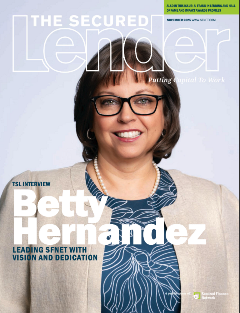
SFNet's The 81st Annual Convention Issue
Intro content. Orci varius natoque penatibus et magnis dis parturient montes, nascetur ridiculus mus. Curabitur iaculis sapien sagittis, accumsan magna ut, blandit massa. Quisque vehicula leo lorem, a tincidunt eros tempor nec. In quis lacus vitae risus egestas tincidunt. Phasellus nulla risus, sodales in purus non, euismod ultricies elit. Vestibulum mattis dolor non sem euismod interdum.
-
Top 5 Apps for Organizing
Mar 7, 2019If you’re like most of us, we try to stay organized in business and life, but it gets increasingly complicated…
-
The Importance of Stretching
Mar 7, 2019Every personal trainer and athletic coach I have ever worked with has stressed the importance of stretching. When working out…
-
SFNet's 40 Under 40 Award Winners Panel Recap
Mar 6, 2019Moderator: Samantha Alexander, regional underwriting manager, Wells Fargo Capital Finance’s Corporate Asset Based Lending group and 2016 CFA 40 Under…
-
SFNet's Inaugural YoPro Leadership Summit
Mar 6, 2019The Secured Finance Network brought together the next generation of commercial finance leaders for a full day of learning and…
-
It’s a Marathon, Not a Sprint
Aug 22, 2018I was recently invited to participate in an executive panel to answer questions from a credit training class comprised of...
-
It’s Not Too Late – Five Member Benefits to Cash In On Now
Aug 1, 2018As we hit the half way mark on calendar year 2018, it is a good time to take stock and…
-
It’s Time To Break Up With Your Phone
Jul 18, 2018Do I have your attention? Let’s be honest here: do you have the attention span to read this article? Compared…
-
Lien Management – What You Need to Know
Jun 6, 2018UCC filing is the cornerstone of all loans and every lien portfolio...
-
Potential Impacts of Blockchain on Commercial Lending
Jan 15, 2018By Raja Sengupta, Executive Vice President and General Manager, Wolters Kluwer’s Lien Solutions When it comes to the rising importance…
-
How to be a Good Leader
Dec 5, 2017I know what you’re thinking…another article about how to be a good leader? The short answer is yes…but this time,…
-
Fintech and Due Diligence – Disruptors and Established Firms Evolve
Oct 30, 2017The fintech sector has gone through a number of manifestations in the past two decades.
-
A Commercial Banker’s Tickler Transition Plan
Oct 18, 2017Just do a keyword search for “bank tickler,” and you’ll quickly realize that banks are still heavily reliant on manual…
-
Understanding and Developing Your Personal Brand: Four Steps to a More Intentional Career Progression
Sep 5, 2017It is imperative for individuals to have a general idea about their future career aspirations, just as companies should have clearly defined strategies.
-
Selecting a Technology Vendor: 3 Questions to Ask
Jul 5, 2017As with anything else at your bank, selecting a technology vendor can be a challenging decision. Users from across different…
-
Why Back-Office Lending Automation Enhances Customer Satisfaction
Apr 25, 2017Every bank strives to keep its customers happy. Of course, some institutions are better at achieving this goal than…
-
The Lost Art of the Loan Purchase
Mar 2, 2017Purchasing a loan directly from a bank whether at par or discount is a not-often-used technique that is easily…
-
Audit Prep: Why a Paperless Approach Makes Sense
Feb 15, 2017How much time does your financial institution spend preparing for audits? We recently surveyed 187 community banks, and the results…
-
Back Office Support Services: Helping you approve more clients
Feb 7, 2017How many times have you come across a potential client who’s financials are either not up to date, not accurate,…
-
“All Assets” is the Key When Drafting UCC-1 Financing Statement Collateral Descriptions
Jan 30, 2017Even when prepared by outside or in-house counsel, many lenders pay close attention to draft UCC financing statements before they…
-
Paper Loan Files: Does Your Bank Know the True Cost?
Jan 12, 2017Sure, there’s a tangible cost associated with deploying an electronic loan imaging system. Software, support, and scanning hardware are just…
.jpg?sfvrsn=f1093d2a_0 "#3 -_ 1 (1)")
August 24, 2023
Source: Yahoo Finance
(Bloomberg) -- As corporate failures surge this year, debt investors are in a fight to salvage as much money as they can from the wreckage. The early skirmishes are going very badly.
The bankruptcy of GenesisCare, a cancer treatment specialist backed by private equity powerhouse KKR & Co. and China Resources Pharmaceutical Group Ltd., is the latest cautionary tale of how much value is being destroyed when companies go bust now.
In previous default cycles, leveraged-loan providers would expect to get 70% to 80% of their cash back from failing companies. Those days are over. Some GenesisCare investors are bracing for a mid-teen percentage, according to people familiar with the matter who aren’t authorized to speak publicly — a new blow to a lending market headed for record low recoveries.
It’s yet another financial weak spot exposed by the end of the easy-money era, as tighter credit pushes overindebted businesses toward the brink. While some investment banks hope for a softer economic landing than feared, the crash in leveraged-loan recoveries is ominous for lenders.
Like last year’s blowup of KKR-backed Envision Healthcare, the GenesisCare situation shows how companies are taking advantage of the looser loan protections that lenders swallowed as they hunted for yield in a low interest-rate world. GenesisCare has snagged a so-called “debtor in possession” financing, including a $200 million pledge to let it keep operating, that disadvantaged existing loan-holders, the people familiar say.
KKR declined to comment, and GenesisCare didn’t respond to a request for comment.
“Companies are engaging in financial alchemy because weak documents allow them flexibility,” says Fraser Lundie, head of fixed income at Federated Hermes in London. “Even if default levels are far lower than historical highs, if recoveries are looking far worse then perhaps you get to the same place.”
GenesisCare joins an expanding list of restructuring deals that have scarred US lenders lately. A first-lien loan to Envision is expected to recover close to zero, according to an August report from Bank of America strategists. Media firm Diamond Sports and air-miles specialist Loyalty Ventures have implied recovery rates running at about 10%, the report says, while tech company Avaya Inc. and energy firm Heritage Power are around 30%.
The strategists estimate recoveries from bankrupt companies are running at 25% on average this year — based on loan prices 30 days after a default — and they predict 50% in the long term.
Europe Too
The fate of GenesisCare, which borrowed in euros and dollars, also suggests the meager recoveries trend will go beyond the US. Europe won’t escape.
Investors such as Blackstone Inc., Bain Capital and HPS Investment Partners were able to get out of US GenesisCare loans — albeit some at punitive prices. But many firms have been stopped from selling out of a 500-million euro loan by Europe’s “whitelist” restrictions, which limit sales to a select group of buyers, people familiar with the process say.
The European loan is marked currently at a 12 euro cents bid price, according to the same people, and the dollar loan at 13 cents.
“Transfer restrictions can prove challenging and create air pockets with limited liquidity,” says Tristram Leach, head of European credit at Apollo Global Management. “With tight whitelist restrictions it’s harder for lenders to get out of loans they’re cooling on.”
Although debt investors can trade more freely in the US, borrowers and buyout firms have been far more cutthroat in restructurings there. Loose loan documents have let companies strip valuable assets from existing creditors or take on new debt that pushes some or all of their lenders down the repayment queue, a tactic known as “uptiering” or “priming.”
Envision is the most notorious case. It devised an out-of-court restructuring that took its most promising division away from existing lenders and pledged it as collateral for a new loan, only to file for bankruptcy later.
“Private equity firms will, with their backs against the wall, be inclined to use every tool available to preserve their returns,” says Derek Gluckman, an analyst at Moody’s Investors Service. “And the covenants give them many tools to allow that at investors’ expense.”
Texas Holdup
The outlook for lender rights isn’t bright either. In June a Texas judge upheld a 2020 emergency refinancing by Serta Simmons Bedding, which handed the mattress maker $200 million of new cash to stay afloat but pushed some lenders including Apollo back in the repayment line.
“What’s different this time from previous default cycles is that distressed funds that have raised large pools of capital are sometimes willing to help private equity sponsors alongside their own interests, but to the detriment of other existing lenders,” says Trey Parker, chief investment officer at Sycamore Tree Capital Partners.
Many lenders have started to include “Serta blockers” in their loan documents by hardening up the legal wording, according to a recent report from Moody’s Investors Services. But about half the leveraged loans it examined still didn’t include protective language.
“It’s hard to fight back if you’ve already given up these protections,” says Gluckman. “Once the genie’s out of the bottle, you can’t unthink the idea.”
One glimmer of hope is the brightening economic outlook and the knowledge that market prices for loans don’t reflect precisely how much lenders will ultimately claw back. The sample size is relatively small still.
Nevertheless, even the most upbeat estimates see recoveries way below previous cycles. Leveraged loans involve a balancing of two risks: the likelihood of a borrower going under, and how much money you get back when they do. Even if default rates are better than feared, the result will be ugly for lenders if recoveries crater.
“Anybody expecting that we’re going to have a 70% recovery on average over the next 12 months is being overly optimistic,” says Roberta Goss, head of bank loans and CLOs at Pretium Partners, a US investment firm. “We expect recoveries in the low 40s.”
©2023 Bloomberg L.P.
View comments (6)
Terms/Privacy PolicyPrivacy
The bankruptcy of GenesisCare, a cancer treatment specialist backed by private equity powerhouse KKR & Co. and China Resources Pharmaceutical Group Ltd., is the latest cautionary tale of how much value is being destroyed when companies go bust now.
In previous default cycles, leveraged-loan providers would expect to get 70% to 80% of their cash back from failing companies. Those days are over. Some GenesisCare investors are bracing for a mid-teen percentage, according to people familiar with the matter who aren’t authorized to speak publicly — a new blow to a lending market headed for record low recoveries.
It’s yet another financial weak spot exposed by the end of the easy-money era, as tighter credit pushes overindebted businesses toward the brink. While some investment banks hope for a softer economic landing than feared, the crash in leveraged-loan recoveries is ominous for lenders.
Like last year’s blowup of KKR-backed Envision Healthcare, the GenesisCare situation shows how companies are taking advantage of the looser loan protections that lenders swallowed as they hunted for yield in a low interest-rate world. GenesisCare has snagged a so-called “debtor in possession” financing, including a $200 million pledge to let it keep operating, that disadvantaged existing loan-holders, the people familiar say.
KKR declined to comment, and GenesisCare didn’t respond to a request for comment.
“Companies are engaging in financial alchemy because weak documents allow them flexibility,” says Fraser Lundie, head of fixed income at Federated Hermes in London. “Even if default levels are far lower than historical highs, if recoveries are looking far worse then perhaps you get to the same place.”
GenesisCare joins an expanding list of restructuring deals that have scarred US lenders lately. A first-lien loan to Envision is expected to recover close to zero, according to an August report from Bank of America strategists. Media firm Diamond Sports and air-miles specialist Loyalty Ventures have implied recovery rates running at about 10%, the report says, while tech company Avaya Inc. and energy firm Heritage Power are around 30%.
The strategists estimate recoveries from bankrupt companies are running at 25% on average this year — based on loan prices 30 days after a default — and they predict 50% in the long term.
Europe Too
The fate of GenesisCare, which borrowed in euros and dollars, also suggests the meager recoveries trend will go beyond the US. Europe won’t escape.
Investors such as Blackstone Inc., Bain Capital and HPS Investment Partners were able to get out of US GenesisCare loans — albeit some at punitive prices. But many firms have been stopped from selling out of a 500-million euro loan by Europe’s “whitelist” restrictions, which limit sales to a select group of buyers, people familiar with the process say.
The European loan is marked currently at a 12 euro cents bid price, according to the same people, and the dollar loan at 13 cents.
“Transfer restrictions can prove challenging and create air pockets with limited liquidity,” says Tristram Leach, head of European credit at Apollo Global Management. “With tight whitelist restrictions it’s harder for lenders to get out of loans they’re cooling on.”
Although debt investors can trade more freely in the US, borrowers and buyout firms have been far more cutthroat in restructurings there. Loose loan documents have let companies strip valuable assets from existing creditors or take on new debt that pushes some or all of their lenders down the repayment queue, a tactic known as “uptiering” or “priming.”
Envision is the most notorious case. It devised an out-of-court restructuring that took its most promising division away from existing lenders and pledged it as collateral for a new loan, only to file for bankruptcy later.
“Private equity firms will, with their backs against the wall, be inclined to use every tool available to preserve their returns,” says Derek Gluckman, an analyst at Moody’s Investors Service. “And the covenants give them many tools to allow that at investors’ expense.”
Texas Holdup
The outlook for lender rights isn’t bright either. In June a Texas judge upheld a 2020 emergency refinancing by Serta Simmons Bedding, which handed the mattress maker $200 million of new cash to stay afloat but pushed some lenders including Apollo back in the repayment line.
“What’s different this time from previous default cycles is that distressed funds that have raised large pools of capital are sometimes willing to help private equity sponsors alongside their own interests, but to the detriment of other existing lenders,” says Trey Parker, chief investment officer at Sycamore Tree Capital Partners.
Many lenders have started to include “Serta blockers” in their loan documents by hardening up the legal wording, according to a recent report from Moody’s Investors Services. But about half the leveraged loans it examined still didn’t include protective language.
“It’s hard to fight back if you’ve already given up these protections,” says Gluckman. “Once the genie’s out of the bottle, you can’t unthink the idea.”
One glimmer of hope is the brightening economic outlook and the knowledge that market prices for loans don’t reflect precisely how much lenders will ultimately claw back. The sample size is relatively small still.
Nevertheless, even the most upbeat estimates see recoveries way below previous cycles. Leveraged loans involve a balancing of two risks: the likelihood of a borrower going under, and how much money you get back when they do. Even if default rates are better than feared, the result will be ugly for lenders if recoveries crater.
“Anybody expecting that we’re going to have a 70% recovery on average over the next 12 months is being overly optimistic,” says Roberta Goss, head of bank loans and CLOs at Pretium Partners, a US investment firm. “We expect recoveries in the low 40s.”
©2023 Bloomberg L.P.
View comments (6)
Terms/Privacy PolicyPrivacy

© 2025 Secured Finance Network

