
TSL Express Daily News
The Secured Lender
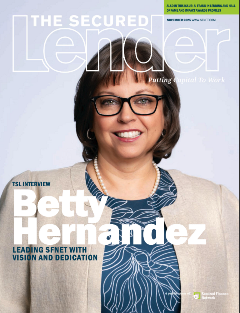
SFNet's The 81st Annual Convention Issue
Intro content. Orci varius natoque penatibus et magnis dis parturient montes, nascetur ridiculus mus. Curabitur iaculis sapien sagittis, accumsan magna ut, blandit massa. Quisque vehicula leo lorem, a tincidunt eros tempor nec. In quis lacus vitae risus egestas tincidunt. Phasellus nulla risus, sodales in purus non, euismod ultricies elit. Vestibulum mattis dolor non sem euismod interdum.
-
Top 5 Apps for Organizing
Mar 7, 2019If you’re like most of us, we try to stay organized in business and life, but it gets increasingly complicated…
-
The Importance of Stretching
Mar 7, 2019Every personal trainer and athletic coach I have ever worked with has stressed the importance of stretching. When working out…
-
SFNet's 40 Under 40 Award Winners Panel Recap
Mar 6, 2019Moderator: Samantha Alexander, regional underwriting manager, Wells Fargo Capital Finance’s Corporate Asset Based Lending group and 2016 CFA 40 Under…
-
SFNet's Inaugural YoPro Leadership Summit
Mar 6, 2019The Secured Finance Network brought together the next generation of commercial finance leaders for a full day of learning and…
-
It’s a Marathon, Not a Sprint
Aug 22, 2018I was recently invited to participate in an executive panel to answer questions from a credit training class comprised of...
-
It’s Not Too Late – Five Member Benefits to Cash In On Now
Aug 1, 2018As we hit the half way mark on calendar year 2018, it is a good time to take stock and…
-
It’s Time To Break Up With Your Phone
Jul 18, 2018Do I have your attention? Let’s be honest here: do you have the attention span to read this article? Compared…
-
Lien Management – What You Need to Know
Jun 6, 2018UCC filing is the cornerstone of all loans and every lien portfolio...
-
Potential Impacts of Blockchain on Commercial Lending
Jan 15, 2018By Raja Sengupta, Executive Vice President and General Manager, Wolters Kluwer’s Lien Solutions When it comes to the rising importance…
-
How to be a Good Leader
Dec 5, 2017I know what you’re thinking…another article about how to be a good leader? The short answer is yes…but this time,…
-
Fintech and Due Diligence – Disruptors and Established Firms Evolve
Oct 30, 2017The fintech sector has gone through a number of manifestations in the past two decades.
-
A Commercial Banker’s Tickler Transition Plan
Oct 18, 2017Just do a keyword search for “bank tickler,” and you’ll quickly realize that banks are still heavily reliant on manual…
-
Understanding and Developing Your Personal Brand: Four Steps to a More Intentional Career Progression
Sep 5, 2017It is imperative for individuals to have a general idea about their future career aspirations, just as companies should have clearly defined strategies.
-
Selecting a Technology Vendor: 3 Questions to Ask
Jul 5, 2017As with anything else at your bank, selecting a technology vendor can be a challenging decision. Users from across different…
-
Why Back-Office Lending Automation Enhances Customer Satisfaction
Apr 25, 2017Every bank strives to keep its customers happy. Of course, some institutions are better at achieving this goal than…
-
The Lost Art of the Loan Purchase
Mar 2, 2017Purchasing a loan directly from a bank whether at par or discount is a not-often-used technique that is easily…
-
Audit Prep: Why a Paperless Approach Makes Sense
Feb 15, 2017How much time does your financial institution spend preparing for audits? We recently surveyed 187 community banks, and the results…
-
Back Office Support Services: Helping you approve more clients
Feb 7, 2017How many times have you come across a potential client who’s financials are either not up to date, not accurate,…
-
“All Assets” is the Key When Drafting UCC-1 Financing Statement Collateral Descriptions
Jan 30, 2017Even when prepared by outside or in-house counsel, many lenders pay close attention to draft UCC financing statements before they…
-
Paper Loan Files: Does Your Bank Know the True Cost?
Jan 12, 2017Sure, there’s a tangible cost associated with deploying an electronic loan imaging system. Software, support, and scanning hardware are just…
.jpg?sfvrsn=f1093d2a_0 "#3 -_ 1 (1)")
June 21, 2023
Source: Yahoo Finance
Equifax Canada Market Pulse Quarterly Business Credit Trends Report - Q1 2023
TORONTO, June 20, 2023 (GLOBE NEWSWIRE) -- New data suggests a pattern of credit expansion and a significant shift in credit usage, indicating potential challenges for businesses according to the Equifax Canada Market Pulse Business Credit Trends Report for Q1 2023. Additionally, it highlights growing financial stress in the industrial and financial trades.
The total outstanding balance on bank-issued installment loans in Canada currently stands at $12.9 Billion, which experienced a year-over-year decline of 2.4 per cent, a first since 2019 when Equifax began monitoring this data. By contrast, during the same period, credit card balances grew by 15 per cent, while lines of credit showed an 11 per cent increase.
“The decline in installment loans and the shift towards credit card usage could be impeding their growth potential and hindering their ability to make larger investments,” said Jeff Brown, Head of Commercial Solutions at Equifax Canada.
Of particular significance in the report is the decline in loan balances, considering that installment loan balances grew by more than 35 per cent compared to 2020. This suggests that borrowers could increasingly gravitate towards credit products that don’t lock them into fixed repayment periods and offer greater flexibility in terms of interest rates. The recent hikes in interest rates by the Bank of Canada may have contributed to this shifting trend.
SLUMP IN NEW BUSINESS STARTS
In Q1 we saw a slowdown in new business openings, which is a deviation from the previous growth trajectory. For the past two years, the months of January, February, and March showed a consistent month-over-month increase in business establishments as the economy began to recover from the impacts of the pandemic. However, in 2023, there has been a noticeable dip in new business starts at the start of the year. As of the end of February, new business starts are down year-over-year by 16.5 per cent in Ontario, 14.2 per cent in B.C., 11.4 per cent in Alberta and 7.5 per cent in Quebec.
INDUSTRIAL AND FINANCIAL TRADES SHOW SIGNS OF STRESS
The industrial and financial trades are also showing signs of financial stress. “Delinquencies in industrial trades are nearing pre-pandemic levels, with late delinquencies rising by nine per cent within a 60-day window annually,” highlighted Brown. “We’re seeing this primarily in trades located in British Columbia and Alberta, suggesting that businesses operating in these regions are facing a particularly challenging economic environment.”
Brown further emphasized the impact of early delinquencies on both financial and industrial trades. “The persistent rise in early delinquency rates in these trades suggests that businesses are struggling to meet their financial obligations,” he explained. “Typically, businesses prioritize paying their suppliers to maintain operations, but it is disturbing to see consecutive quarterly increases in delinquencies on the supplier side as well.”
MAJORITY OF CANADIAN BUSINESSES HAVE A POSITIVE OUTLOOK
Despite the challenges posed by rising interest rates and high inflation, Statistics Canada data shows that 73.5 per cent of businesses surveyed are optimistic about their future over the next 12 months.
“Equifax data also suggests some regional gains in the demand for commercial credit, which is a positive sign and speaks to the resilience and optimism of Canadian businesses,” Brown acknowledged. “However, it is essential to consider the potential consequences of the current credit landscape. Equifax Canada continues to monitor the situation closely and provides crucial data to support businesses and lenders so they can make informed credit decisions during these uncertain times.”
As borrowing behaviours continue to evolve, financial institutions and lending organizations should consider adapting their offerings to meet the changing demands of consumers and businesses. Understanding these trends can help individuals and organizations make informed decisions regarding their credit choices.
About Equifax
At Equifax (NYSE: EFX), we believe knowledge drives progress. As a global data, analytics, and technology company, we play an essential role in the global economy by helping financial institutions, companies, employers, and government agencies make critical decisions with greater confidence. Our unique blend of differentiated data, analytics, and cloud technology drives insights to power decisions to move people forward. Headquartered in Atlanta and supported by nearly 14,000 employees worldwide, Equifax operates or has investments in 24 countries in North America, Central and South America, Europe, and the Asia Pacific region. For more information, visit Equifax.ca.
Contact:
Andrew Findlater
Equifax Canada Media Relations
SELECT Public Relations
MediaRelationsCanada@equifax.com
afindlater@selectpr.ca
(647) 444-1197
TORONTO, June 20, 2023 (GLOBE NEWSWIRE) -- New data suggests a pattern of credit expansion and a significant shift in credit usage, indicating potential challenges for businesses according to the Equifax Canada Market Pulse Business Credit Trends Report for Q1 2023. Additionally, it highlights growing financial stress in the industrial and financial trades.
The total outstanding balance on bank-issued installment loans in Canada currently stands at $12.9 Billion, which experienced a year-over-year decline of 2.4 per cent, a first since 2019 when Equifax began monitoring this data. By contrast, during the same period, credit card balances grew by 15 per cent, while lines of credit showed an 11 per cent increase.
“The decline in installment loans and the shift towards credit card usage could be impeding their growth potential and hindering their ability to make larger investments,” said Jeff Brown, Head of Commercial Solutions at Equifax Canada.
Of particular significance in the report is the decline in loan balances, considering that installment loan balances grew by more than 35 per cent compared to 2020. This suggests that borrowers could increasingly gravitate towards credit products that don’t lock them into fixed repayment periods and offer greater flexibility in terms of interest rates. The recent hikes in interest rates by the Bank of Canada may have contributed to this shifting trend.
SLUMP IN NEW BUSINESS STARTS
In Q1 we saw a slowdown in new business openings, which is a deviation from the previous growth trajectory. For the past two years, the months of January, February, and March showed a consistent month-over-month increase in business establishments as the economy began to recover from the impacts of the pandemic. However, in 2023, there has been a noticeable dip in new business starts at the start of the year. As of the end of February, new business starts are down year-over-year by 16.5 per cent in Ontario, 14.2 per cent in B.C., 11.4 per cent in Alberta and 7.5 per cent in Quebec.
INDUSTRIAL AND FINANCIAL TRADES SHOW SIGNS OF STRESS
The industrial and financial trades are also showing signs of financial stress. “Delinquencies in industrial trades are nearing pre-pandemic levels, with late delinquencies rising by nine per cent within a 60-day window annually,” highlighted Brown. “We’re seeing this primarily in trades located in British Columbia and Alberta, suggesting that businesses operating in these regions are facing a particularly challenging economic environment.”
Brown further emphasized the impact of early delinquencies on both financial and industrial trades. “The persistent rise in early delinquency rates in these trades suggests that businesses are struggling to meet their financial obligations,” he explained. “Typically, businesses prioritize paying their suppliers to maintain operations, but it is disturbing to see consecutive quarterly increases in delinquencies on the supplier side as well.”
MAJORITY OF CANADIAN BUSINESSES HAVE A POSITIVE OUTLOOK
Despite the challenges posed by rising interest rates and high inflation, Statistics Canada data shows that 73.5 per cent of businesses surveyed are optimistic about their future over the next 12 months.
“Equifax data also suggests some regional gains in the demand for commercial credit, which is a positive sign and speaks to the resilience and optimism of Canadian businesses,” Brown acknowledged. “However, it is essential to consider the potential consequences of the current credit landscape. Equifax Canada continues to monitor the situation closely and provides crucial data to support businesses and lenders so they can make informed credit decisions during these uncertain times.”
As borrowing behaviours continue to evolve, financial institutions and lending organizations should consider adapting their offerings to meet the changing demands of consumers and businesses. Understanding these trends can help individuals and organizations make informed decisions regarding their credit choices.
About Equifax
At Equifax (NYSE: EFX), we believe knowledge drives progress. As a global data, analytics, and technology company, we play an essential role in the global economy by helping financial institutions, companies, employers, and government agencies make critical decisions with greater confidence. Our unique blend of differentiated data, analytics, and cloud technology drives insights to power decisions to move people forward. Headquartered in Atlanta and supported by nearly 14,000 employees worldwide, Equifax operates or has investments in 24 countries in North America, Central and South America, Europe, and the Asia Pacific region. For more information, visit Equifax.ca.
Contact:
Andrew Findlater
Equifax Canada Media Relations
SELECT Public Relations
MediaRelationsCanada@equifax.com
afindlater@selectpr.ca
(647) 444-1197

© 2025 Secured Finance Network

