
TSL Express Daily News
The Secured Lender
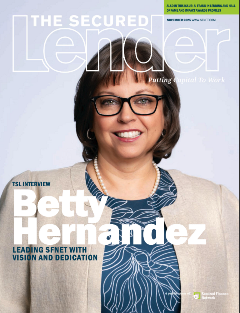
SFNet's The 81st Annual Convention Issue
Intro content. Orci varius natoque penatibus et magnis dis parturient montes, nascetur ridiculus mus. Curabitur iaculis sapien sagittis, accumsan magna ut, blandit massa. Quisque vehicula leo lorem, a tincidunt eros tempor nec. In quis lacus vitae risus egestas tincidunt. Phasellus nulla risus, sodales in purus non, euismod ultricies elit. Vestibulum mattis dolor non sem euismod interdum.
-
Top 5 Apps for Organizing
Mar 7, 2019If you’re like most of us, we try to stay organized in business and life, but it gets increasingly complicated…
-
The Importance of Stretching
Mar 7, 2019Every personal trainer and athletic coach I have ever worked with has stressed the importance of stretching. When working out…
-
SFNet's 40 Under 40 Award Winners Panel Recap
Mar 6, 2019Moderator: Samantha Alexander, regional underwriting manager, Wells Fargo Capital Finance’s Corporate Asset Based Lending group and 2016 CFA 40 Under…
-
SFNet's Inaugural YoPro Leadership Summit
Mar 6, 2019The Secured Finance Network brought together the next generation of commercial finance leaders for a full day of learning and…
-
It’s a Marathon, Not a Sprint
Aug 22, 2018I was recently invited to participate in an executive panel to answer questions from a credit training class comprised of...
-
It’s Not Too Late – Five Member Benefits to Cash In On Now
Aug 1, 2018As we hit the half way mark on calendar year 2018, it is a good time to take stock and…
-
It’s Time To Break Up With Your Phone
Jul 18, 2018Do I have your attention? Let’s be honest here: do you have the attention span to read this article? Compared…
-
Lien Management – What You Need to Know
Jun 6, 2018UCC filing is the cornerstone of all loans and every lien portfolio...
-
Potential Impacts of Blockchain on Commercial Lending
Jan 15, 2018By Raja Sengupta, Executive Vice President and General Manager, Wolters Kluwer’s Lien Solutions When it comes to the rising importance…
-
How to be a Good Leader
Dec 5, 2017I know what you’re thinking…another article about how to be a good leader? The short answer is yes…but this time,…
-
Fintech and Due Diligence – Disruptors and Established Firms Evolve
Oct 30, 2017The fintech sector has gone through a number of manifestations in the past two decades.
-
A Commercial Banker’s Tickler Transition Plan
Oct 18, 2017Just do a keyword search for “bank tickler,” and you’ll quickly realize that banks are still heavily reliant on manual…
-
Understanding and Developing Your Personal Brand: Four Steps to a More Intentional Career Progression
Sep 5, 2017It is imperative for individuals to have a general idea about their future career aspirations, just as companies should have clearly defined strategies.
-
Selecting a Technology Vendor: 3 Questions to Ask
Jul 5, 2017As with anything else at your bank, selecting a technology vendor can be a challenging decision. Users from across different…
-
Why Back-Office Lending Automation Enhances Customer Satisfaction
Apr 25, 2017Every bank strives to keep its customers happy. Of course, some institutions are better at achieving this goal than…
-
The Lost Art of the Loan Purchase
Mar 2, 2017Purchasing a loan directly from a bank whether at par or discount is a not-often-used technique that is easily…
-
Audit Prep: Why a Paperless Approach Makes Sense
Feb 15, 2017How much time does your financial institution spend preparing for audits? We recently surveyed 187 community banks, and the results…
-
Back Office Support Services: Helping you approve more clients
Feb 7, 2017How many times have you come across a potential client who’s financials are either not up to date, not accurate,…
-
“All Assets” is the Key When Drafting UCC-1 Financing Statement Collateral Descriptions
Jan 30, 2017Even when prepared by outside or in-house counsel, many lenders pay close attention to draft UCC financing statements before they…
-
Paper Loan Files: Does Your Bank Know the True Cost?
Jan 12, 2017Sure, there’s a tangible cost associated with deploying an electronic loan imaging system. Software, support, and scanning hardware are just…
.jpg?sfvrsn=f1093d2a_0 "#3 -_ 1 (1)")
January 9, 2023
Source: Businesswire
Continued pricing pressures and economic headwinds fuel recessionary predictions, while inflation remains a top challenge facing small and midsize businesses
January 05, 2023 06:00 AM Eastern Standard Time
NEW YORK--(BUSINESS WIRE)--The majority of small and midsize U.S. business leaders anticipate a recession in 2023, according to JPMorgan Chase’s 2023 annual Business Leaders Outlook survey released today. In total, 65% of midsize businesses and 61% of small businesses expect a recession in the year ahead.
The heightened recession expectations come as businesses nationwide continue to combat inflation. Nearly all midsize businesses (91%) are experiencing inflation challenges, while 45% of small businesses list inflation as a top challenge for the year ahead, up from 20% one year ago. Inflation has forced small and midsize businesses to re-evaluate approaches to pricing, sourcing materials and running operations and has had widespread impacts, including:
Passing Costs onto Consumers: 83% of midsize businesses have passed at least some increased costs onto consumers and buyers, while 68% of small businesses have raised prices on select or all products and services.
Rising Business Expenses: 94% of small businesses say inflation has impacted expenses, with 38% noting that expenses have increased by 11% or more. Leading cost drivers for both small and midsize businesses include wages and benefits costs for hiring and retaining employees, shipping and other supply chain-related expenditures, including costs of raw materials.
Bracing for Longer-Term Increases: 82% of midsize businesses are likely to continue to increase prices to mitigate costs, while the majority of small businesses expect that higher costs for labor, rents, shipping and materials are here to stay.
“Inflation has been a challenging headwind impacting businesses of all sizes, across all industries,” said Ginger Chambless, head of research, JPMorgan Chase Commercial Banking. “While we have seen some encouraging signs that inflation has started to moderate and should cool over 2023, businesses may still want to consider adjustments to strategies, pricing or product mixes to help weather the storm in the near-term.”
Mixed Economic Views
Despite the shared consensus on a recession in 2023, small businesses remain more optimistic in their economic outlooks than midsize business leaders, who expressed much more downbeat views compared to this time last year.
Midsize businesses expressing optimism for the global economy declined to 8% from 34% one year ago and the number optimistic about the national economy fell to 22% from 50% at the start of 2022. Conversely, nearly half of small businesses, which are less likely to have exposure to national and international markets, expressed optimism for the national and global economy at 49% and 45%, respectively, which is similar to last year’s sentiment.
High Performance Expectations
Small and midsize business leaders’ outlook for their own company’s performance remains high, with 72% of small businesses and 66% of midsize businesses expressing optimism for the year ahead.
More than two-thirds (69%) of small businesses expect increased revenue and sales in the year ahead and 65% anticipate greater profits in 2023. Similarly, 63% of midsize businesses expect increased revenue and sales in 2023, and 51% predict greater profits.
“Following the challenges of the last few years, it’s encouraging to see the resilience of small business owners and leaders,” said Ben Walter, CEO, Chase Business Banking. “The next economic cycle is always right around the corner, so our role is to help small business owners plan ahead so they can succeed in good times and bad.”
Help Still Wanted
Concerns of a recession and dimmed economic outlooks largely aren’t restraining 2023 hiring plans, as 51% of small business leaders anticipate hiring full-time employees and 50% of midsize business leaders expect to increase headcount. To hire and retain employees, 67% of midsize businesses plan to increase wages and/or benefits and 43% plan to offer upskilling and training opportunities, while 42% of small businesses expect to increase wages. Small businesses’ primary drivers for full-time hiring plans include expected sales growth and improved financial positions.
“While businesses may be cautious in their economic outlooks, their actions display a focus on growth and investing in their employees,” said John Simmons, head of Middle Market Banking & Specialized Industries, JPMorgan Chase Commercial Banking. “Businesses are signaling that they’re practiced in being nimble and prepared for several different scenarios, which are keys to operating effectively in today’s economy.”
New Year’s To-Do List
Businesses may consider focusing on the following considerations in their 2023 planning:
Stay In-Tune with Economic Trends: While business leaders are undoubtedly familiar with today’s top economic headlines, they will want to keep a close eye on whether current trends related to the Federal Reserve, consumer spending, inflation, labor markets and more continue, abate or reverse in the year ahead. Learn more here.
Recession-Proof Your Business: Regardless of when or if a recession ultimately materializes, businesses can take steps today to remain flexible, bolster their balance sheet and even find opportunities amid volatility. Learn more here.
Optimize Working Capital: Working capital is a key indicator of businesses’ financial health, and maintaining it is even more crucial in times of economic volatility. To manage working capital more effectively, businesses may want to consider utilizing supply chain finance and dynamic discount solutions, implementing more efficient inventory management and reworking current debt to reduce liabilities. Learn more here.
For more information on the Business Leaders Outlook survey, please view the midsize and small business reports.
+++
Survey Methodology
JPMorgan Chase’s Business Leaders Outlook survey was conducted online from November 14-22, 2022, for small businesses (annual revenues between $100,000 and $20 million) and from November 29 – December 13, 2022, for midsize businesses (annual revenues between $20 million and $500 million). In total, 1,799 business leaders in various industries across the U.S. participated in the survey. For year-over-year trends, current data is compared to data collected in the fourth quarter of previous years. The results of this online survey are within statistical parameters for validity, and the error rate is plus or minus 3.1% for the small business findings and plus or minus 3.5% for the midsize business findings, both at the 95% confidence level.
About JPMorgan Chase
JPMorgan Chase & Co. (NYSE: JPM) is a leading financial services firm based in the United States of America (“U.S.”), with operations worldwide. JPMorgan Chase had $3.8 trillion in assets and $288 billion in stockholders’ equity as of September 30, 2022. The Firm is a leader in investment banking, financial services for consumers and small businesses, commercial banking, financial transaction processing and asset management. Under the J.P. Morgan and Chase brands, the Firm serves millions of customers in the U.S., and many of the world’s most prominent corporate, institutional and government clients globally. Information about JPMorgan Chase & Co. is available at www.jpmorganchase.com.
© 2023 JPMorgan Chase & Co. All rights reserved. JPMorgan Chase Bank, N.A. Member FDIC. Deposits held in non-U.S. branches are not FDIC insured. Visit jpmorgan.com/cb-disclaimer for disclosures and disclaimers related to this content.
Contacts
Midsize Businesses: Melinda Bonner, melinda.bonner@chase.com
Small Businesses: Stephanie Ahenkora, stephanie.ahenkora@chase.com
January 05, 2023 06:00 AM Eastern Standard Time
NEW YORK--(BUSINESS WIRE)--The majority of small and midsize U.S. business leaders anticipate a recession in 2023, according to JPMorgan Chase’s 2023 annual Business Leaders Outlook survey released today. In total, 65% of midsize businesses and 61% of small businesses expect a recession in the year ahead.
The heightened recession expectations come as businesses nationwide continue to combat inflation. Nearly all midsize businesses (91%) are experiencing inflation challenges, while 45% of small businesses list inflation as a top challenge for the year ahead, up from 20% one year ago. Inflation has forced small and midsize businesses to re-evaluate approaches to pricing, sourcing materials and running operations and has had widespread impacts, including:
Passing Costs onto Consumers: 83% of midsize businesses have passed at least some increased costs onto consumers and buyers, while 68% of small businesses have raised prices on select or all products and services.
Rising Business Expenses: 94% of small businesses say inflation has impacted expenses, with 38% noting that expenses have increased by 11% or more. Leading cost drivers for both small and midsize businesses include wages and benefits costs for hiring and retaining employees, shipping and other supply chain-related expenditures, including costs of raw materials.
Bracing for Longer-Term Increases: 82% of midsize businesses are likely to continue to increase prices to mitigate costs, while the majority of small businesses expect that higher costs for labor, rents, shipping and materials are here to stay.
“Inflation has been a challenging headwind impacting businesses of all sizes, across all industries,” said Ginger Chambless, head of research, JPMorgan Chase Commercial Banking. “While we have seen some encouraging signs that inflation has started to moderate and should cool over 2023, businesses may still want to consider adjustments to strategies, pricing or product mixes to help weather the storm in the near-term.”
Mixed Economic Views
Despite the shared consensus on a recession in 2023, small businesses remain more optimistic in their economic outlooks than midsize business leaders, who expressed much more downbeat views compared to this time last year.
Midsize businesses expressing optimism for the global economy declined to 8% from 34% one year ago and the number optimistic about the national economy fell to 22% from 50% at the start of 2022. Conversely, nearly half of small businesses, which are less likely to have exposure to national and international markets, expressed optimism for the national and global economy at 49% and 45%, respectively, which is similar to last year’s sentiment.
High Performance Expectations
Small and midsize business leaders’ outlook for their own company’s performance remains high, with 72% of small businesses and 66% of midsize businesses expressing optimism for the year ahead.
More than two-thirds (69%) of small businesses expect increased revenue and sales in the year ahead and 65% anticipate greater profits in 2023. Similarly, 63% of midsize businesses expect increased revenue and sales in 2023, and 51% predict greater profits.
“Following the challenges of the last few years, it’s encouraging to see the resilience of small business owners and leaders,” said Ben Walter, CEO, Chase Business Banking. “The next economic cycle is always right around the corner, so our role is to help small business owners plan ahead so they can succeed in good times and bad.”
Help Still Wanted
Concerns of a recession and dimmed economic outlooks largely aren’t restraining 2023 hiring plans, as 51% of small business leaders anticipate hiring full-time employees and 50% of midsize business leaders expect to increase headcount. To hire and retain employees, 67% of midsize businesses plan to increase wages and/or benefits and 43% plan to offer upskilling and training opportunities, while 42% of small businesses expect to increase wages. Small businesses’ primary drivers for full-time hiring plans include expected sales growth and improved financial positions.
“While businesses may be cautious in their economic outlooks, their actions display a focus on growth and investing in their employees,” said John Simmons, head of Middle Market Banking & Specialized Industries, JPMorgan Chase Commercial Banking. “Businesses are signaling that they’re practiced in being nimble and prepared for several different scenarios, which are keys to operating effectively in today’s economy.”
New Year’s To-Do List
Businesses may consider focusing on the following considerations in their 2023 planning:
Stay In-Tune with Economic Trends: While business leaders are undoubtedly familiar with today’s top economic headlines, they will want to keep a close eye on whether current trends related to the Federal Reserve, consumer spending, inflation, labor markets and more continue, abate or reverse in the year ahead. Learn more here.
Recession-Proof Your Business: Regardless of when or if a recession ultimately materializes, businesses can take steps today to remain flexible, bolster their balance sheet and even find opportunities amid volatility. Learn more here.
Optimize Working Capital: Working capital is a key indicator of businesses’ financial health, and maintaining it is even more crucial in times of economic volatility. To manage working capital more effectively, businesses may want to consider utilizing supply chain finance and dynamic discount solutions, implementing more efficient inventory management and reworking current debt to reduce liabilities. Learn more here.
For more information on the Business Leaders Outlook survey, please view the midsize and small business reports.
+++
Survey Methodology
JPMorgan Chase’s Business Leaders Outlook survey was conducted online from November 14-22, 2022, for small businesses (annual revenues between $100,000 and $20 million) and from November 29 – December 13, 2022, for midsize businesses (annual revenues between $20 million and $500 million). In total, 1,799 business leaders in various industries across the U.S. participated in the survey. For year-over-year trends, current data is compared to data collected in the fourth quarter of previous years. The results of this online survey are within statistical parameters for validity, and the error rate is plus or minus 3.1% for the small business findings and plus or minus 3.5% for the midsize business findings, both at the 95% confidence level.
About JPMorgan Chase
JPMorgan Chase & Co. (NYSE: JPM) is a leading financial services firm based in the United States of America (“U.S.”), with operations worldwide. JPMorgan Chase had $3.8 trillion in assets and $288 billion in stockholders’ equity as of September 30, 2022. The Firm is a leader in investment banking, financial services for consumers and small businesses, commercial banking, financial transaction processing and asset management. Under the J.P. Morgan and Chase brands, the Firm serves millions of customers in the U.S., and many of the world’s most prominent corporate, institutional and government clients globally. Information about JPMorgan Chase & Co. is available at www.jpmorganchase.com.
© 2023 JPMorgan Chase & Co. All rights reserved. JPMorgan Chase Bank, N.A. Member FDIC. Deposits held in non-U.S. branches are not FDIC insured. Visit jpmorgan.com/cb-disclaimer for disclosures and disclaimers related to this content.
Contacts
Midsize Businesses: Melinda Bonner, melinda.bonner@chase.com
Small Businesses: Stephanie Ahenkora, stephanie.ahenkora@chase.com

© 2025 Secured Finance Network

