
TSL Express Daily News
The Secured Lender
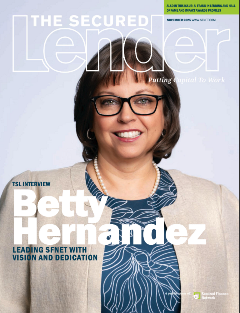
SFNet's The 81st Annual Convention Issue
Intro content. Orci varius natoque penatibus et magnis dis parturient montes, nascetur ridiculus mus. Curabitur iaculis sapien sagittis, accumsan magna ut, blandit massa. Quisque vehicula leo lorem, a tincidunt eros tempor nec. In quis lacus vitae risus egestas tincidunt. Phasellus nulla risus, sodales in purus non, euismod ultricies elit. Vestibulum mattis dolor non sem euismod interdum.
-
Top 5 Apps for Organizing
Mar 7, 2019If you’re like most of us, we try to stay organized in business and life, but it gets increasingly complicated…
-
The Importance of Stretching
Mar 7, 2019Every personal trainer and athletic coach I have ever worked with has stressed the importance of stretching. When working out…
-
SFNet's 40 Under 40 Award Winners Panel Recap
Mar 6, 2019Moderator: Samantha Alexander, regional underwriting manager, Wells Fargo Capital Finance’s Corporate Asset Based Lending group and 2016 CFA 40 Under…
-
SFNet's Inaugural YoPro Leadership Summit
Mar 6, 2019The Secured Finance Network brought together the next generation of commercial finance leaders for a full day of learning and…
-
It’s a Marathon, Not a Sprint
Aug 22, 2018I was recently invited to participate in an executive panel to answer questions from a credit training class comprised of...
-
It’s Not Too Late – Five Member Benefits to Cash In On Now
Aug 1, 2018As we hit the half way mark on calendar year 2018, it is a good time to take stock and…
-
It’s Time To Break Up With Your Phone
Jul 18, 2018Do I have your attention? Let’s be honest here: do you have the attention span to read this article? Compared…
-
Lien Management – What You Need to Know
Jun 6, 2018UCC filing is the cornerstone of all loans and every lien portfolio...
-
Potential Impacts of Blockchain on Commercial Lending
Jan 15, 2018By Raja Sengupta, Executive Vice President and General Manager, Wolters Kluwer’s Lien Solutions When it comes to the rising importance…
-
How to be a Good Leader
Dec 5, 2017I know what you’re thinking…another article about how to be a good leader? The short answer is yes…but this time,…
-
Fintech and Due Diligence – Disruptors and Established Firms Evolve
Oct 30, 2017The fintech sector has gone through a number of manifestations in the past two decades.
-
A Commercial Banker’s Tickler Transition Plan
Oct 18, 2017Just do a keyword search for “bank tickler,” and you’ll quickly realize that banks are still heavily reliant on manual…
-
Understanding and Developing Your Personal Brand: Four Steps to a More Intentional Career Progression
Sep 5, 2017It is imperative for individuals to have a general idea about their future career aspirations, just as companies should have clearly defined strategies.
-
Selecting a Technology Vendor: 3 Questions to Ask
Jul 5, 2017As with anything else at your bank, selecting a technology vendor can be a challenging decision. Users from across different…
-
Why Back-Office Lending Automation Enhances Customer Satisfaction
Apr 25, 2017Every bank strives to keep its customers happy. Of course, some institutions are better at achieving this goal than…
-
The Lost Art of the Loan Purchase
Mar 2, 2017Purchasing a loan directly from a bank whether at par or discount is a not-often-used technique that is easily…
-
Audit Prep: Why a Paperless Approach Makes Sense
Feb 15, 2017How much time does your financial institution spend preparing for audits? We recently surveyed 187 community banks, and the results…
-
Back Office Support Services: Helping you approve more clients
Feb 7, 2017How many times have you come across a potential client who’s financials are either not up to date, not accurate,…
-
“All Assets” is the Key When Drafting UCC-1 Financing Statement Collateral Descriptions
Jan 30, 2017Even when prepared by outside or in-house counsel, many lenders pay close attention to draft UCC financing statements before they…
-
Paper Loan Files: Does Your Bank Know the True Cost?
Jan 12, 2017Sure, there’s a tangible cost associated with deploying an electronic loan imaging system. Software, support, and scanning hardware are just…
.jpg?sfvrsn=f1093d2a_0 "#3 -_ 1 (1)")
December 22, 2022
Source: Vinson & Elkins LLP
Background
In 2016, pursuant to a credit agreement governed by the laws of the State of New York (the “Credit Agreement”), Revlon took out a seven-year, $1.8 billion syndicated, collateralized term loan (the “2016 Term Loan”). The 2016 Term Loan had a “springing” maturity determined as the first to occur of September 7, 2023, or the Accelerated Maturity Date. “Accelerated Maturity Date” was defined as “the date that is 91 days prior to the stated maturity” of a specified set of senior notes due in 2021 (the “2021 Notes”), “if on such date, any 2021 Notes remain outstanding.”
Citibank, N.A. (“Citibank”) served as the administrative agent (the “Agent”) for the lenders under the Credit Agreement (the “Lenders”). In May 2020, as a result of its constrained liquidity position, Revlon entered into a series of liability management transactions to raise additional capital by using certain of its intellectual property collateral that originally secured the 2016 Term Loan (the “BrandCo IP Collateral”) to secure three new loan facilities (the “BrandCo Facilities”) from a subset of the Lenders of the 2016 Term Loan on a priming basis vis-à-vis the 2016 Term Loan (collectively, the “May 2020 Transactions”). The May 2020 Transactions included an amendment to the Credit Agreement that accomplished the following: first, the amendment allowed the BrandCo IP Collateral to be released from securing the 2016 Term Loan and to secure a new money facility (the “2020 New Money Facility”)3 on a first-priority basis; second, the amendment included a provision allowing 2016 Term Loan Lenders who approved the May 2020 Transactions and participated in funding the 2020 New Money Facility (the “BrandCo Lenders”) to convert their respective 2016 Term Loan claims into new claims via two roll-up facilities (the “Roll-Up Facilities”) secured by the BrandCo IP Collateral on a second-and third-priority basis (as applicable)4 with the 2020 New Money Facility and by the remaining assets securing the 2016 Term Loan on a pari passu basis with the 2016 Term Loan. Effectively, in a variation of what is commonly referred to as an “uptier” exchange transaction, the BrandCo Lenders, by participating in the May 2020 Transactions, would continue to have their existing claims in respect of the 2016 Term Loan and their claims in respect of the 2020 New Money Facility secured by the BrandCo IP Collateral while those existing Lenders withholding their consent to the May 2020 Transactions would lose their previously existing first-priority liens on the BrandCo IP Collateral.5 On August 7, 2020, Revlon offered to exchange the 2021 Notes for new notes due in 2024 to avoid the acceleration of the 2016 Term Loan, and ultimately retired the 2021 Notes at a discount to par.
On August 11, 2020, Revlon tasked the Agent with executing an out-of-court roll-up transaction with five Lenders who were exchanging their positions in the 2016 Term Loan for positions in the BrandCo Facilities. Effectuating the roll-up in the manner requested by Revlon (i.e., making an off-cycle payment of accrued interest not yet due under the 2016 Term Loan to all Lenders) required the Agent to treat the transaction as a full payment of the 2016 Term Loan in the Agent’s loan processing software and to enter certain manual overrides of such software (including an intended internal transfer of the related principal amount to an internal “wash” account) in a manner intended to avoid any funds in respect of principal of the 2016 Term Loan from actually being transmitted; however, the overrides were not properly executed and, as a result, the total amount of principal and accrued interest outstanding on the 2016 Term Loan for each Lender — nearly $1 billion and including almost $900 million of Citibank’s own money for which the Agent had not received any related payment from the Revlon borrower — was wired to the Lenders, with the almost $900 million principal portion being wired in error at a time when no principal payment was due (the “Mistaken Payment”).6 The day after the Mistaken Payment, Citibank sent recall notices to the Lenders notifying them of the mistake. Managers controlling about half of the total Mistaken Payment agreed to return the mistakenly wired funds; however, certain of the Lenders (the “Defendants”) refused to do so.
Citibank’s Lawsuit and the District Court Ruling: On August 17, 2020, the Agent sued the Defendants in the District Court under theories of unjust enrichment, conversion, money had and received, and payment by mistake.7 The Agent sought relief in the form of specific restitution of its identifiable funds. The District Court granted a temporary restraining order freezing the funds,8 and after a bench trial, the District Court, relying on the Banque Worms9 decision of the New York Court of Appeals, entered judgment for the Defendants and held that recovery by the Agent was barred by the discharge-for-value defense.10 The Agent appealed the District Court’s ruling to the Second Circuit. While the appeal was pending, Revlon filed for chapter 11 bankruptcy in the United States Bankruptcy Court in the Southern District of New York.
The Syndicated Lending Market’s Reaction: In late 2020 and 2021, in reaction to the District Court’s ruling and in response to widespread surprise and dismay of financial institutions engaged in the business of acting as administrative agents under syndicated credit facilities, participants in the syndicated lending market developed and incorporated so-called “erroneous payment” provisions (also known as “Revlon Blocker” provisions) in form loan agreements in an effort to avoid the results that would otherwise be implicated by the District Court’s ruling in the event of future mistaken payments by institutions acting as administrative agents.11
The Second Circuit’s Ruling: September 8, 2022, the Second Circuit reversed the District Court and concluded that because the Lenders were on inquiry notice that the Mistaken Payment was erroneously paid and the 2016 Term Loan was not “due” at the time of the Mistaken Payment, the Defendants could not retain the funds via New York’s discharge-for-value exception.
New York law calls for restitution of mistaken payments unless the recipient of the payment significantly changed its position in reliance on the mistake such that it would be unjust to require repayment. In Banque Worms, the New York Court of Appeals endorsed an exception to this general rule based on the First Restatement’s discharge-for-value principle, which provides that:
[a] creditor of another or one having a lien on another’s property who has received from a third person any benefit in discharge of the debt or lien, is under no duty to make restitution therefor, although the discharge was given by mistake of the transferor as to his interests or duties, if the transferee made no misrepresentation and did not have notice of the transferor’s mistake.12
The Restatement describes this rule as a “specific application of the underlying principle of [a] bona fide purchase.” The Banque Worms court further explains:
[w]hen a beneficiary receives money to which it is entitled and has no knowledge that the money was erroneously wired, the beneficiary should not have to wonder whether it may retain the funds; rather, such a beneficiary should be able to consider the transfer of funds as a final and complete transaction, not subject to revocation.13
In its ruling, the Second Circuit focused on two components of the discharge-for-value defense: whether the recipients of the Mistaken Payment were (1) on notice that the Mistaken Payment was accidental and (2) entitled to the money paid at the time of the Mistaken Payment.
Notice. As to notice, the Second Circuit concluded that the Defendants were on inquiry notice14 of the Agent’s error and, therefore, could not satisfy the notice requirement of the discharge-for-value exception. The Second Circuit examined notice from the perspective of a reasonably prudent investor and determined that the attendant “facts were sufficiently troublesome such that a reasonably prudent investor would have made reasonable inquiry, and [that such] inquiry would have revealed that the [Mistaken Payment] was made in error.”15 In making this assessment, the Second Circuit observed:
- The Defendants received no prior notice that Revlon intended to prepay the principal of the 2016 Term Loan, as required by the Credit Agreement,16
- The Defendants believed at the time of the Mistaken Payment that Revlon was insolvent by as much as $1.71 billion.17
- The 2016 Term Loan was trading at 20−30 cents on the dollar, and Revlon could have retired 2016 Term Loan more cheaply by buying available participations on the market rather than by paying the full face amount of the debt.18
- Revlon’s offer to exchange the 2021 Notes for new ones due in 2024 to avoid acceleration of the 2016 Term Loan was inconsistent with an intent to retire the 2016 Term Loan a few days later.19
Additionally, the Second Circuit explained that the inquiry notice test does not examine “whether the recipient of the mistaken payment reasonably believed that the payment was genuine and not the result of mistake[, but rather] whether a prudent person, who faced some likelihood of avoidable loss if the receipt of funds proved illusory, would have seen fit in light of the warning signs to make reasonable inquiry in the interest of avoiding that risk of loss.”20 That is, “[i]t is an objective test, not dependent on what the actual recipient believed.”21
Entitlement to Funds. The Second Circuit also determined that New York law, as articulated by the New York Court of Appeals in Banque Worms, requires that in order for recipients of erroneous payments to take shelter in the discharge-for-value exception, such recipients must be entitled to the payment which they received. Therefore, because the debt on which the Agent mistakenly made a payment was not due for another three years, Defendants could not invoke the discharge-for-value exception as a shield against the Agent’s claims for restitution. In further support of its reasoning, the Court also noted the following policy considerations:
- A present entitlement requirement harmonizes with New York’s general rule covering receipt of mistaken payments, which is that a party receiving money as the result of a mistaken must in equity and good conscience return it.22
- A present entitlement requirement serves as an administratively convenient way to allocate a loss between two parties when “there is no reason in justice why one should suffer rather than the other.”23
- Allowing the Defendants to retain the Mistaken Payment under these facts results in a windfall to the Defendants over and above what they bargained for, while an order of restitution would leave the Defendants exactly where they contracted to be.24
Addendum. In an addendum to the opinion, Senior Judge Pierre N. Leval submitted that the facts before the Court were beyond the scope of the discharge-for-value exception because (1) the Agent had no intent to discharge Revlon’s debt when it made the Mistaken Payment, and (2) the Agent was not mistaken as to its interests or duties.25
Concurrence. In a concurring opinion, Judge Michael H. Park posited that Defendants’ lack of entitlement to the funds is dispositive of the dispute as the Lenders did not have a preexisting right to keep the money it received. Simply put, he explains that:
[w]hen people receive money by mistake, the law usually requires them to give it back. This commonsense rule allows transferors to reclaim property that rightfully belongs to them—whether misdirected funds, an accidental overpayment, or a credit to the wrong account. An exception to the general rule can sometimes protect a recipient who was owed the mistakenly paid money. Under this narrow equitable defense, called ‘discharge-for-value,’ a creditor who receives a payment in discharge of a debt he is owed can defeat restitution by invoking his own competing claim to the disputed funds. But here, Defendants had no such claim—not when they received Citibank’s money, and not when they were asked to give it back—because they were not entitled to payment for another three years after Citibank erroneously sent them half a billion dollars. Allowing them to keep that money would turn equity on its head and topple the settled expectations of participants in the multitrillion-dollar corporate debt market. It would also be brutally unfair.26
Key Takeaways and Implications
The Second Circuit’s decision is significant for credit agreements governed by New York law, as it declares that in New York, a creditor may not invoke the discharge-for-value exception unless the debt at issue is presently payable. Moreover, the Second Circuit’s ruling helps define for creditors New York’s test of what constitutes adequate notice in the case of mistaken payments. As demonstrated by this case, such an analysis is an objective analysis from the perspective of a reasonably prudent investor and largely fact-dependent.
From a policy perspective, the decision clarifies the application of the discharge-for-value rule among parties to syndicated loan facilities, and recognizes that the consequences of nullifying bargained-for rights and obligations due to unintended and accidental conduct is contrary to well-settled law and public policy considerations.
As discussed above, prior to the Second Circuit rendering this decision, market participants responded to the District Court’s ruling by drafting and incorporating various forms of erroneous payment provisions into new and existing credit agreements. The intent of this language is to provide parameters around the parties’ respective obligations with respect to erroneous payments, reduce the administrative agent’s assumed risk in syndicated loan transactions, and negate the consequences of the District Court’s ruling. Variations of such provisions contain different features, but the language generally addresses:
- under which circumstances the recipient of an erroneous payment must return such payment, including the form and timing of notice that triggers a recipient’s obligation to return an erroneous payment;
- whether or not interest may accrue on an erroneous payment until it is returned;
- obligations of syndicate lenders to notify administrative agents upon receiving payments not yet due, without prior notice, in different amounts than notified, or that such lenders are otherwise aware of being transmitted or received by mistake;
- conditions under which a mistaken payment shall be presumed to have been made;
- an administrative agent’s rights and remedies in the event an erroneous payment is not returned (including setoff rights and/or deemed assignment by the lender not returning such payment of an equivalent portion of its loans);
- a waiver of rights or claims to an erroneous payment and waiver of any defense based on discharge-for-value or any similar doctrine; and
- in some cases, the effect or non-effect of erroneous payments on increasing or otherwise affecting the Agent’s ability to collect such erroneous payments from the borrower and other credit parties.27
While administrative agents may take some comfort from the Second Circuit’s decision, due to the fact and governing law-dependent nature of the analysis, and out of an abundance of caution to avoid unintended consequences of common law doctrines like the “discharge for value” defense, financial institutions acting as administrative agents and/or collateral agents will likely continue to require variations of erroneous payment provisions in their credit agreements for the foreseeable future.
To view all formatting for this article (eg, tables, footnotes), please access the original here.


