

- Forging Ahead: How Flexible ABL Financing is Fueling Growth for U.S. Manufacturers
- SFNet Announces FY27 Leadership Appointments
- The Signal in the Survey: ABL Credit Quality as an Early Warning of Systemic Stress
- Factoring Volume Rises as Industry Outlook Strengthens, SFNet Mid-Year Survey Finds
- Frozen Food's Middle Market Is an Underserved Credit Opportunity
Provident Bank’s Commercial Finance Team on Demand, Structure and Relationship Banking in 2026
August 4, 2026
By Eileen Wubbe

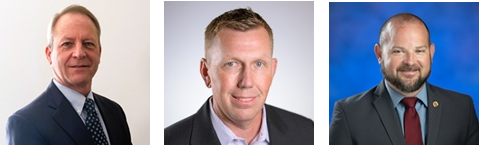
Pictured, left to right: Bruce Gibson, Ken Kaestner and Ron Krauskopf
In this interview, Bruce Gibson, first vice president, senior relationship manager, Ken Kaestner, director and ABL Group head, and Ron Krauskopf, executive vice president - head of Specialty Commercial Lending, discuss how Provident Bank is scaling its asset-based and specialty lending capabilities to support middle-market borrowers across New Jersey, eastern Pennsylvania, and New York. They highlight growing demand for flexible working capital solutions, the mainstreaming of ABL in a volatile environment, and Provident’s ability to compete with larger institutions while preserving local decision making and relationship continuity.
TSL: Bruce and Ken, let’s start off by giving our readers a brief background on your career trajectory.
Bruce Gibson: I've spent my entire career in commercial finance, with a primary focus on asset-based lending and working capital solutions for middle-market companies. Over the years I've worked with privately held businesses, private equity sponsors, family-owned companies, and turnaround situations across a wide range of industries.
What has always attracted me to ABL is that it requires understanding a company's business—not just its financial statements. You're looking at operations, collateral, cash flow, management and growth strategy to structure financing that helps companies execute their plans.
I recently joined Provident because I saw an opportunity to combine that specialized ABL expertise with the resources and relationship-driven culture of a strong regional bank. We have a pretty wide range of customers that we work with.
Ken Kaestner: Much of my lending career and growth was in a portfolio management capacity within the asset-based lending group of a large money center bank, holding several management positions. In 2017 I had the opportunity to start a market de novo for a Boston headquartered bank looking to expand geographically into the Mid Atlantic. Building a team and growing a portfolio from the ground up was a rewarding and exciting challenge for me. That was my first chance to get out of the bigger banks, have a marketing role, and feel like many of the entrepreneurs that I’ve financed over the years.
Finally, in October 2023, I was fortunate to join Lakeland Bank to run their ABL group at the time of the announced merger with Provident. This gave me the chance to oversee and lead my own ABL team with a New Jersey-headquartered bank that has a strong reputation and vision for growth. Provident’s size and emphasis on the customer experience are ideal in a market impacted by bank consolidation with middle market companies seeking an alternative to larger financial institutions.
Gibson: I’ve known Ken for a long time and always admired his team, especially the last group he worked with. So, I was excited when he reached out about this opportunity.
Bruce, you recently joined Provident as first vice president and senior relationship manager on the ABL team, with a mandate to originate and manage more complex asset-based relationships across the Northeast. What drew you to Provident at this stage in your career, and what types of deals are you most focused on bringing into the portfolio?
Gibson: After many years in the industry, I wanted to join an organization that is investing in commercial banking and values long-term customer relationships.
My focus is originating middle-market asset-based transactions throughout the Northeast, particularly companies with complex working capital needs, acquisition financing, recapitalizations, refinancing opportunities and businesses that can benefit from a more flexible capital structure.
TSL: From your vantage points, what are you seeing in the commercial and secured finance markets across Provident’s footprint right now – in terms of demand for working capital, structures you’re using more often, or sectors that are most active?
Gibson: Demand remains healthy despite higher interest rates. Companies continue to need liquidity to fund growth, acquisitions, inventory builds and shareholder transitions.
We're seeing borrowers become more thoughtful about capital structure. Rather than maximizing leverage, many are looking for flexibility and certainty of execution.
Asset-based lending continues to gain market share because it often provides more availability than traditional cash-flow lending while giving borrowers room to navigate economic uncertainty.
Traditional cash flow lending sometimes can be a more difficult environment to work in regarding covenants and it’s more restrictive. ABL can sometimes be a little more flexible, and we are able to take a hands-on approach and work with borrowers as issues arise.
Kaestner: To echo some of Bruce’s comments, the ABL product has become more mainstream as companies navigate through volatile times, whether it was a COVID impact years ago, supply chain disruptions, tariff impacts or geopolitical events. Companies leaning on their working capital assets to generate liquidity through uncertainty is prudent.
For us, we’re always looking for an event that a company’s going through, either something that’s impacted the business or an acquisition that they’re looking to make or something that’s requiring them to revisit their banking relationship. If everything’s just status quo, it’s hard to unseat the incumbent bank without something requiring them to go to market.
Provident has created a niche and is building momentum in a bank environment impacted by consolidation. With more than $25 billion in assets, with broad product offerings that go beyond ABL, and include treasury management, insurance services, and wealth management, allowing us to compete with larger competitors, but with a community-focused and customer experience-driven approach.
TSL: Provident has been expanding its specialty lending capabilities, including asset-based, mortgage warehouse, and healthcare lending; where are you finding the strongest traction today, and how does that translate into your pipeline for the rest of 2026?
Ron Krauskopf: Provident’s expansion within specialty lending has been an important strategic objective since the creation of the division following our merger in 2024. Each platform serves a different segment of the commercial market, allowing us to diversify our loan portfolio and credit risk. Building teams focused on these specific industries allows us to reach a large population of new-to-bank customers as specialty lending covers a larger geography. The tremendous loan growth in the specialty lending portfolio has been instrumental to our commitment to C&I lending, which helps to balance our CRE ratio. We see specialty lending as a unique ingredient to our franchise value. We continue to note incredible opportunity within the entire division for 2026 and beyond; in fact, we’ve recently hired an additional six relationship managers across these disciplines. We feel very confident in the scale our built-out teams can achieve within asset-based, mortgage warehouse and healthcare lending. We are also undertaking an initiative to significantly expand our SBA lending platform in the very near future.
TSL: Regional and community banks have been under pressure the last couple of years, from rate volatility to deposit competition and regulatory scrutiny. What are the most significant headwinds and opportunities you’re navigating as a regional bank lender in New Jersey, eastern Pennsylvania, and New York?
Krauskopf: Deposit competition is intense and the top priority for any bank within our region, but with this challenge comes the chance to be creative. As an example, our healthcare lending group offers several programs that provide short-term financing solutions that leave the deposits and cash management needs with us long after the loan is paid off. We’re doing the same with newer physicians, dentists and veterinarians by working with them as they get started with their practice. As their needs evolve, our product offering grows in complexity with them, but we continue to service the physician with the same team of bankers that they are familiar with. In 2026, our view of a customer is now a holistic one where we can understand and anticipate their changing needs and have solutions at the ready – such as Provident Protection Plus for insurance or Beacon Trust for wealth management and estate & tax planning. We want to bank as much of the customer as we can.
TSL: Middle-market borrowers often say they value proximity and consistency from a regional bank. How do you differentiate Provident’s credit approach and relationship model from larger national lenders when you’re structuring commercial and secured facilities?
Gibson: We combine local decision-making with sophisticated commercial banking capabilities.
Customers want experienced bankers who understand their business and stay involved throughout the relationship—not just during underwriting.
Having specialized lending teams working alongside commercial bankers allows us to structure solutions that fit the customer’s business while maintaining a consistent relationship experience.
So, it’s a bit of a shift from what a lot of organizations have done in ABL, having BDOs versus having RMs. The model here is a little different. As loans are brought in, they’re managed by the person who brings them in. So that’s a big differentiator, and I think customers appreciate that.
Kaestner: As Bruce noted, local decision-making and continuity of the relationship are critical for us. A company will deal with the same team from the proposal letter, through underwriting, legal documentation, and ongoing throughout the term of the relationship. That continuity fosters long lasting fruitful relationships. Our executives, whether on the lending or credit side, are always willing to join a meeting. The fact that the company could have access to senior management within the drive of their office is very exciting for a lot of our prospects and customers.
How are you thinking about risk and structure right now – advance rates, covenants, collateral monitoring – especially for borrowers that may be carrying higher leverage or more seasonal cash flows than they were a few years ago?
Gibson: Credit discipline is always important.
Today's environment reinforces the importance of understanding collateral quality, borrower performance and management's ability to execute.
Our objective isn't simply to close transactions—it's to build relationships that last through multiple business cycles.
Kaestner: Now more than ever liquidity is paramount and an important aspect of our analysis of a particular credit. As previously noted, the current economic environment remains uncertain. Having the right balance sheet to navigate through is critical for a company to be successful and something we really focus on.
TSL: What are one or two things you wish borrowers, sponsors, or their advisors better understood about working with a regional bank’s commercial and ABL teams?
Gibson: The earlier you engage your lender, the more options you generally have.
Bringing lenders into the conversation early creates opportunities to structure financing proactively rather than reactively.
A banking relationship should include strategic advice and treasury services—not just a loan.
Kaestner: With borrowers/sponsors they shouldn’t devalue the importance of having the right financial partner for their business. It goes well beyond just having a line in place to buy inventory and pay the bills. With Provident you get support from a bank that will take the time to understand your business and work with you to achieve your long-term goals. Whenever Bruce or I are meeting with a company we try and point to the long-term relationship we want to have to support the company. We’ll give references to our entire portfolio that they can talk to because it is important. As much as money feels like a commodity or a loan, it really isn’t when they need to work through a challenging time.
TSL: Looking ahead over the next 12–18 months, what should borrowers, sponsors, and referral partners expect to see from Provident’s commercial and asset-based lending teams in terms of appetite, product focus, and how you want to show up in the market?
Gibson: I expect continued demand for flexible working capital solutions. Provident intends to remain an active lender, focusing on well-structured transactions, experienced management teams and industries where we have expertise.
Kaestner: Provident is passionate about the customers and markets we serve and has invested heavily, not just in ABL, but in several verticals across the Bank. Our ABL team has more than doubled in size within the last 24 months, which has translated into strong loan growth and a building reputation as the premier choice for asset-based lending solutions. We’ve benefitted from bank consolidation that’s out there. There’s not a lot of us supporting the lower middle market space. We feel we’re well positioned to capitalize on that, and we expect a lot of momentum in the months and years to come.
Gibson: I’ll add that asset-based lending has evolved significantly. Today it's a strategic capital solution used by healthy, growing businesses, private equity sponsors and companies with complex working capital needs.
Our goal is to be a trusted financial partner that helps clients grow through every stage of their business.
Every transaction tells a story. The collateral may secure the loan, but it's management's vision and execution that ultimately determine success.
About the Author




© 2026 Secured Finance Network

