

- Legacy Corporate Lending Names Anthony Masci Chief Risk Officer
- The Contra Nobody Is Watching: Tariff Refunds Through an ABL Due Diligence Lens
- The Perils of Dual Engagements
- Forging Ahead: How Flexible ABL Financing is Fueling Growth for U.S. Manufacturers
- SFNet Announces FY27 Leadership Appointments
Patient Capital in Action: An Interview with Cambridge Savings Bank’s Yvonne Kizner and Cal Navatto
February 17, 2026
By Michele Ocejo

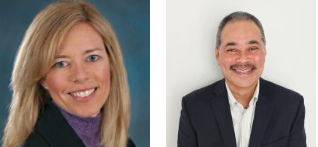
In December, Cambridge Savings Bank (CSB) announced that W. Calvin “Cal” Navatto had joined the Bank as senior vice president, senior asset-based lending (ABL) relationship manager within its Commercial Division. In this role, Navatto focuses on expanding CSB’s asset-based lending portfolio, deepening relationships with middle-market companies, and supporting the continued growth of the Bank’s ABL business.
Navatto brings decades of experience in commercial finance, business development, and asset-based lending, including senior leadership roles at eCapital Corp., CIT (a subsidiary of First Citizens Bank), and UMB Capital Finance. His career includes sourcing and closing complex ABL and factoring transactions across the Northeast, reestablishing and scaling regional offices, and building strong networks of referral partners.
Here, we speak with Navatto and Yvonne Kizner, head of asset-based lending at CSB about Navatto’s new role and the team’s vision for the future.
Cal, your career spans decades across commercial finance and ABL. What key lessons from your prior roles are you bringing into your new position at Cambridge and what about this role attracted you?
NAVATTO: I think with any role, you have to get a good grasp of what the bank’s credit and risk appetites are, and that’s been my approach with all of the firms that I’ve been with. With that knowledge, as I’m trying to do the business development efforts, I can identify clients that might be appropriate for Cambridge. And as far as what attracted me to this role, I’ve known Yvonne for many, many years, although not as well as I know her now, which I’m very thankful for, and she’s had great success in starting and managing ABL groups in the past, and I just thought that this was a great opportunity to join her team at Cambridge.
I find it very exciting to help expand the Cambridge Savings Bank footprint and reach into the New York and New Jersey area, which has been my backyard pretty much for the last 25 to 30 years. So, just having developed relationships here and trying to incorporate those into the CSB world and mindset is what I like to do.
What specific market opportunities or client needs do you see in the Northeast and broader East Coast that make this the right time for growth?
NAVATTO: I think there are many lower-middle-market ABL opportunities that exist along the Northeast corridor and the East Coast, in general, that might be a bit too small for money center banks or where regional banks might not have the expertise to structure, monitor, or even service the type of customers that CSB is targeting right now. I believe these dynamics give Cambridge great opportunity to expand its footprint, serving customers outside of the New England market, which has been its core market pretty much since its inception.
KIZNER: Banks just continue to consolidate, and ABL shops that we compete with continue to get larger. So in our neck of the woods, we have Berkshire Bank combining with Brookline Bank and we have Eastern Bank continuing to make acquisitions, which increases their balance sheet, and it provides an opportunity for us to provide loans in the lower end of the middle market. We’ll always look to finance up to $25 million, but $10 million and below can be a difficult space for companies to find financing, and that’s still very much our sweet spot. So, I think there’s tremendous opportunity.
Are there any particular industries where you’re seeing more of a need now?
NAVATTO: I think it’s pretty much across the board. You have wholesalers, importers, distributors, manufacturers, some service organizations, like staffing, for instance. 2025 was a very tough market for a lot of companies with tariffs and disruptions and uncertainty. I think that’s probably going to continue a little bit. Obviously, we just ended the fiscal year. Financial statements are going to be coming out in another two to three months. So, we’ll have to see what happens then, and if companies are continuing to breach their covenantswe think it’s across the board where there might be opportunities for us grow.
KIZNER: I’ve heard from some folks in the industry that M&A activity is heating up a bit. As Cal mentioned, 2025 was a tough year. I think everyone was just sort of trying to understand how the environment was changing and not really making big moves. If anything, just holding off on hiring, and to the extent that maybe they had an acquisition on the table, they took a pause. But I feel like, I think folks feel like they don’t really have clarity on a lot of the tariff issues, but nothing will be solidifying any time soon, so let’s just move forward with our plans.
I know ourselves and our portfolio, some tuck-in acquisitions are occurring, and we’d like to be supportive of that. Hopefully that will remain true for 2026.
Strong referral networks and managing complex ABL transactions are integral to this role. What strategies have you found most effective for developing and maintaining these relationships?
NAVATTO: I have to say I’ve been blessed to have developed very deep relationships with my referral sources during my career. One of the things that I found to be exceptionally helpful is providing very quick answers to those referral sources when they provide you with a financing opportunity. And that’s one of the keys to gaining and maintaining their trust. Also Cambridge is willing to provide creative solutions to financing needs and may even jump into a “turnaround situation” much earlier than a typical bank would do. So, we’re not necessarily needing to see the three to six months’ worth of demonstrated turnaround. It really could be at that inflection point.
I think those are the kinds of things that help us to differentiate ourselves to both companies directly and to private equity groups that have portfolio companies that need help.
Yvonne, what specific strengths or perspectives do you believe Cal brings that complement CSB’s existing strategy?
KIZNER: Just reiterating what Cal has already said, for me it was really experience, number one, and obviously location. So it was his deep experience and those COI relationships that he has. As Cal mentioned, we knew each other prior to him coming on board, and it’s the strength of his networking skills, that’s how he and I knew one another, and just his impeccable reputation out there in the marketplace. We are really excited to have someone of his caliber on board.
Having Cal here enables us to open up our network outside of our very strong Boston and New England roots. I will say that New York has always been part of the CSB-ABL footprint. Our very first ABL client that we booked at CSB was located in New Jersey. Having a very senior person on site in New York City, I think will be a game-changer to opening up new relationships and new opportunities. For example, private equity sponsors have always been a key element of our origination efforts, and you really need to have feet on the ground in New York to solidify your relationships there. I’m excited to see how this can impact our group going forward in terms of growth.
From your experience building CSB’s ABL platform, how has the ABL lending landscape evolved since you started and how’s the bank adapting to those changes?
KIZNER: I think that the biggest and most obvious change is the proliferation of private capital. There has been a huge number of non-bank lenders that are backed by all sorts of private capital that have popped up in the last 18 to 24 months. I would say the number of competitors has increased, but with those shops, most can’t compete with bank pricing. So that’s one critical advantage that we have for ABL transactions.
Then it’s the way that we market ourselves. We talk a lot about relationship lending and maintaining great relationships with existing borrowers and those relationships that have brought those borrowers in, whether they’re turnaround advisors or private equity sponsors. We like to say that we evolve with our relationships. We understand borrowers at times face challenges, and managing through those challenges together in a partnership because of the deep communication we have is what will keep customers to stay with us and hopefully attract new ones.
I like to call it patient capital. When borrowers face challenges, we’re patient. We can still properly protect the bank and mitigate risk while also allowing them to go through steps that they need to in order to come out the other side. I think, again, 2026 will prove to be very interesting. It’s certainly not getting any less competitive out there.
What are your expectations for the ABL team’s growth over the next few years, both in terms of portfolio size and types of industries or clients you’re targeting?
KIZNER: I’m not sure that the types of industries or clients that we’re targeting will be different. As Cal mentioned, it tends to always be with ABL manufacturers, distributors, service companies, like staffing companies that have AR. I would say the only thing we don’t really touch is healthcare receivables because you really need to be very active in that space to understand it. So, really the world is our oyster in terms of what types of industries, and we, of course, want to grow our portfolio. And while we always do a number of participations or club deals, direct lending is where we want to grow. We want to grow with our existing customer base, so as I mentioned, if that means supporting them with tuck-in acquisitions and just larger line sizes as their working capital needs grow, that’s always going to be part of our strategy. And, again, new relationships are what we want. And I think Cal will be a key cornerstone to us achieving that success in 2026 and beyond.
How do you see your role evolving now that the team has expanded with a senior team member, like Cal? What opportunities and challenges are you most excited about?
KIZNER: I think with Cal’s experience, both of us can get more involved in mentorship and working to pass on our deep knowledge to those younger members of the team and enabling them to be even better at their jobs. We have a really dynamic team. We have our field examiner onsite who is overseen by our operations manager who himself has a deep bench of field exam experience. We have a collateral analyst, portfolio managers. That’s in addition to our originators. It’s a great team, and I would say it’s really on the collateral analyst piece and portfolio management piece that I’ll be able to spend some more time with and I’m hoping Cal can spend some time on those as well.
NAVATTO: With me coming on board, I’m hoping to give Yvonne a little bit more time to be able to do her networking and some of those other things that she’d like to focus on, as well as my colleague John Bobbin. Just having another body here to help distribute some of the workload is helpful, so everybody can have the time that they need to devote to the particular areas that they’re focused on.
About the Author




© 2026 Secured Finance Network

