Interview with Cedric Henley, Partner at SLR Capital Partners and Chief Risk Officer of SLR Specialty Finance on Current Trends in U.S. ABL
July 14, 2025
By Eileen Wubbe

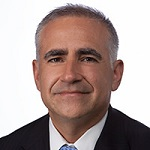
Cedric Henley, an ABL expert with 30+ years, leads SLR’s ABL investment strategies focused on the US middle-market — including accounts receivable financing, inventory lending, hard asset lending, equipment financing, and leasing, discusses how ABL provides stability for managers and investors alike in an uncertain market.
With concerns of a tariff-driven recession on the brink, Cedric believes the current market environment offers managers with the opportunity to seek more creative ways to provide liquidity for their portfolio companies through ABL financing solutions. Further, as regional banks continue to tighten credit standards, trim balance sheets, and rationalize business lines, he believes now is an opportune time to increase supply of portfolio-level transactions, joint ventures and acquisition opportunities.
TSL Express: You’ve seen several economic cycles in your career. How does today’s economic uncertainty—marked by policy volatility and geopolitical risks—compare to previous downturns for ABL investors and lenders?
Henley: Today’s environment is unique in that the uncertainty is being driven as much by geopolitical and regulatory shifts—tariffs, reshoring, and monetary policy shifts—as it is by traditional credit or consumer cycles. For ABL lenders, this creates both risk and opportunity. Unlike past downturns where liquidity dried up entirely, we’re now seeing targeted dislocations where traditional banks are pulling back, often for regulatory capital reasons rather than credit losses. In that context, ABL actually becomes a preferred tool because it ties directly to working capital assets with measurable value, liquidity, and strong downside protection. So, while there’s uncertainty, this is also an attractive entry point for disciplined ABL lenders who have multi-cycle experience and know how to underwrite asset conversion cycles and structure borrowing bases for volatility.
How is your firm positioning its ABL strategies in anticipation of or response to a potential tariff-driven recession?
We’re proactively tightening our focus on sectors with more resilient supply chains or domestic production models that are less exposed to cross-border volatility. We’re also seeing an increase in demand for financing to support inventory rebalancing, reshoring, and nearshoring initiatives—all of which are asset-heavy and well-suited to ABL structures. From a risk standpoint, we’re modeling for longer inventory cycles and margin compression in tariff-impacted verticals, but that also means larger asset bases and increased collateral coverage, or we walk away if we cannot get comfortable with managing downside risk. Our ABL approach is grounded in rigorous field exam diligence and real-time monitoring, which gives us the ability to react quickly as conditions evolve.
Where are you seeing the most signs of stress in the private credit ecosystem today, and how does ABL compare to cash-flow lending in those scenarios?
Stress is emerging most visibly in sectors that are rate-sensitive or margin-constrained—think consumer discretionary, building products, and industrials with long supply chains. In many of these cases, traditional cash-flow lenders are pulling back or pushing for tighter covenants. ABL, by contrast, offers a more flexible option for borrowers who have solid working capital assets, but are seeing EBITDA compression. Because we’re lending against current asset values—not future performance as in cash flow lending, which relies on enterprise value—we can often provide liquidity when cash-flow lenders won’t. And we’re not just a stop-gap—we’re structuring financing solutions with clear visibility into asset turnover and collateral liquidity, which gives both us and our borrowers greater confidence.
Are you seeing more borrowers who are new to ABL?
Absolutely. Our inbound activity from bank-referral sources is at an all-time high. Many borrowers had long relationships with their previous capital source and didn’t expect to be cut off or constrained. Now, with more conservative risk appetites at those institutions, we’re seeing middle-market companies—many of them family- or PE-owned—explore non-bank ABL for the first time. Our role is to be both a capital provider and an advisor, helping them transition from a traditional relationship-driven lending model to a more performance- and asset-driven approach that we think can be even more resilient across cycles.
Which sectors in the U.S. middle market are presenting the best opportunities for ABL right now?
We’re particularly constructive on retail, industrial services, food and beverage, logistics, and value-added manufacturing. These are areas where working capital assets—primarily inventory and receivables—are meaningful, liquid, and financeable, and where borrowers are navigating real but manageable volatility.
We’re also seeing growing opportunity in sectors undergoing digital transformation or consolidation—where there’s disruption, there’s often asset-backed capital need. Importantly, we’re focused on businesses with strong management teams and clear visibility into cash conversion cycles. We focus on working with companies that have a reason to exist. We avoid loan-to-liquidate transactions or situations where the borrower has a high certainty of entering bankruptcy.
What signals or borrower behaviors are you watching most closely to identify early signs of stress or opportunity?
Inventory aging, dilution on receivables, and changes in borrowing base compliance are always our first and early signals of trouble. But we also pay close attention to soft signals—like delays in reporting, changes in audit firms, or unexplained margin erosion. On the flip side, we see opportunity when a borrower is proactively seeking capital to invest in operations, expand capacity, or support a restructuring or turnaround with a clear plan. Our monitoring isn’t just about catching issues early—it’s about staying ahead of them so we can help borrowers preserve enterprise value and maintain liquidity.
What areas of innovation—technology, data analytics, structure—do you think will reshape how ABL is delivered or monitored in the coming years?
SLR and some of our peers are beginning to leverage AI agents for basic tasks, and as these agents become more advanced, we’re moving toward a future where they can manage much of the heavy lifting involved in reconciling and reviewing borrowing base data. These agents will also be capable of performing traditionally manual tasks—such as logging into borrower systems to verify and validate collateral—reducing friction while significantly improving both speed and accuracy.
Although our weekly BBC model already provides near real-time data integration, it remains largely monitored by humans. AI presents a clear opportunity to fully automate reconciliation, exception flagging, and key input validation. This will enable credit teams to focus on the exceptions that require human judgement.
Second, AI and predictive analytics will play a larger role in risk management. While we already track trends in payment performance, margins, and aging cycles, AI will allow us to go deeper—identifying patterns that precede credit deterioration. We call it the “canary test”—catching early warning signs before they become major issues. These insights will allow lenders to act proactively rather than reactively.
Third, enhanced portfolio monitoring tools will reshape how credit teams manage risk. Instead of relying on static reports, we’ll use interactive dashboards that can filter by industry, client concentration, payment behavior, and dilution trends—providing a real-time view of both micro and macro risks.
In short, technology won’t replace the nuanced judgment that ABL requires, but it will amplify our ability to deliver faster, smarter, and more scalable solutions—both for lenders and borrowers.
About the Author